Category: Career

  • Keep Your Own Score

    Golf has been teaching me things my whole life. I just didn’t always have time to listen.

    Lately, with the kids getting older, I’ve found my way back to the course. And I keep noticing that everything I love about the game is a lesson that works off the course too.

    You keep your own score. Nobody checks your math. The game only means something if you’re honest, and not the honesty that shows up in competition. The kind you practice when it’s just you, your ball, and a bad lie nobody saw.

    You play against yourself. The course doesn’t care what you shot last week. Every round is a fresh test of patience, discipline, and how you respond when a good drive ends up in a divot.

    Some evenings I’ll walk nine with the bag on my back. At 45 it feels like a ruck with a scorecard, and there’s something clarifying about it. Just you, the walk, and the next shot.

    And there’s the adventure of it. A course you’ve never played is a new puzzle every time. New holes, new views, and often new people worth knowing. This game has taken me places I’d never have gone otherwise.

    It reveals people too. Four hours on a course will teach you more about a business partner, a client, or a friend than a year of meetings. How they handle a bad hole. Whether they count every stroke. What they talk about when the conversation goes quiet. Who someone is shows up somewhere between the first tee and the eighteenth green.

    Some of my favorite rounds lately have been with my son. Same course, same game, two generations keeping our own scores.

    A gentleman’s game that demands honesty, rewards patience, keeps you humble, and gives you four hours of real conversation in a world that’s forgotten how.

    That’s not just golf. That’s a pretty good way to live.

  • Don’t Drift in Your First Leadership Role

    Leadership Starts Small

    The first time someone looks to you for direction, it can feel bigger than your title. New leaders often assume they need better answers, stronger presence, or a more polished voice. In reality, what people need most is steadiness, clarity, and someone who pays attention to what matters.

    That is the heart behind Dave Mull. This site is a place for young executives and early-career professionals who want to lead well without losing themselves in the process. Here you will find practical reflections on leadership, culture, faith, family, and intentional living, all grounded in real responsibility and real life.

    Why This Matters

    Ambition is not the problem. Drift is. It happens when success starts shaping your values instead of the other way around. It happens when work crowds out your family, when urgency replaces conviction, or when your calendar reveals a life you never meant to build.

    Don’t drift from what matters most.

    That line is more than a tagline. It is a reminder that leadership is not only about performance. It is also about formation. The habits you build, the people you become, and the priorities you protect will shape your influence long before your résumé does.

    What You Can Expect Here

    • Clear essays on leadership for people carrying real responsibility
    • Honest thoughts on culture, conviction, and decision-making
    • Encouragement for balancing work, faith, and family
    • Practical perspective for building a meaningful life on purpose

    Dave brings more than two decades of experience as a healthcare executive, along with the perspective of a husband, father of three, and writer. The goal is not to impress. The goal is to help you think clearly, lead faithfully, and stay anchored in what matters most.

    A Good Place to Begin

    If you are building a career, leading a team, or trying to live with greater intention, you are in the right place. Start with the blog, subscribe for new essays every Friday, and keep coming back for thoughtful encouragement that meets you where real leadership happens: at work, at home, and in the quiet choices no one else sees.

  • You’re There for a Reason: Don’t Shrink from the Moment

    At some point in your career, you’ll find yourself in a room where your voice could change the course of a conversation, a decision, or even a company’s direction. And in that moment, you’ll be faced with a choice: to speak up or to stay silent.

    This is where many people — even incredibly talented, thoughtful, capable people — shrink.

    We tell ourselves:

    • “I’m not the most senior person here.”

    • “Someone else probably has a better idea.”

    • “I don’t want to rock the boat.”

    But here’s the truth: you’re in the room for a reason.

    You weren’t hired to be invisible. You weren’t given a seat at the table to just nod along. You were brought in because of your experiences, your insight, and your perspective — things no one else in the room has in quite the same way.

    I learned this lesson the hard way.

    I was in a large meeting with several senior leaders — many of them ranked higher than me. The group was deep into a discussion on a topic I knew extremely well. But as the conversation unfolded, what I was hearing didn’t match my experience on the ground. I disagreed — not just a little, but significantly.

    And yet… I said nothing.

    I told myself it wasn’t the right time. That maybe I was missing something. That I’d follow up later.

    After the meeting, I pulled the most senior leader aside and shared my thoughts. His reaction caught me off guard. He wasn’t just disappointed — he was frustrated. He looked at me and said:

    “Dave, you’re in that meeting for a reason. You’re a trusted member of this team. I need you to speak up and share your experience. I can only act on what I know — and I need to hear all points of view.”

    That conversation stuck with me.

    I learned that day that staying silent doesn’t serve anyone — not your team, not your leadership, and not yourself. Your perspective might be exactly what’s needed to make the right decision, avoid a misstep, or spot a blind spot others missed. But it only matters if you share it.

    Your silence might feel safe, but your voice is what makes you valuable.

    There will be moments when speaking up feels risky. But that’s exactly when your voice matters most. Those moments define leadership — and they build trust, respect, and influence over time.

    So the next time you’re tempted to sit back and play small, remind yourself:

    • I’m not here by accident.

    • Playing it safe isn’t what got me this far.

    • This room needs what I have to offer.

    Use your voice. Don’t shrink. You belong.

  • Why Athletes Make GREAT Hires in Business

    Introduction

    Athletes know what it takes to win both on the field and in the workplace. The same mindset that drives success in sports can be a game-changer in business. Whether it’s the ability to set goals, handle pressure, work as part of a team, or understand failure, former athletes bring a unique set of skills that make them some of the best hires in any industry.

    1. The Power of Discipline and Consistency

    Athletes train daily, often sacrificing short-term comfort for long-term success.

    In business, this translates to:

    • A strong work ethic and commitment to continuous improvement.
    • The ability to show up and execute, even on tough days.
    • A deep understanding that success is the result of consistent effort over time.

    2. Handling Pressure and Performing Under Stress

    Game-winning shots and high-stakes negotiations have one thing in common : pressure.

    Athletes develop:

    • A high level of composure in fast-paced, high-pressure environments.
    • The ability to think strategically and execute under tight deadlines.
    • Resilience in the face of setbacks and failures.

    3. Goal-Setting and Performance Tracking

    Athletes don’t just train, they track progress and make adjustments.

    This mindset applies to:

    • Setting measurable business objectives and staying accountable.
    • Continuously evaluating and optimizing performance.
    • Taking feedback constructively to improve outcomes.

    4. Leadership and Teamwork

    Great teams win championships, and great companies succeed through collaboration.

    Athletes understand:

    • The importance of communication, accountability, and shared success.
    • How to lead by example and push teammates to perform at their best.
    • The necessity of adapting to different roles for the greater good.

    5. Competitiveness and Drive

    Athletes hate losing, but more importantly, they love winning.

    In business, this manifests as:

    • A natural hunger for results and continuous improvement.
    • The ability to push through challenges instead of quitting.
    • A strong focus on both personal and company-wide success.

    Conclusion: Why Companies Should Prioritize Hiring Athletes

    If you’re looking for employees who are disciplined, resilient, and team-oriented, former athletes should be at the top of your list. Their ability to handle pressure, adapt, and work toward goals makes them invaluable in any business setting.

    In my life, I’ve experienced this with myself, coworkers, people I’ve hired, my family and in my community. I’ve personally learned through training for and racing in triathlons while also nurturing a career and being a husband and dad. To do this and achieve my goals, it required discipline, planning, lots of hard work, commitment. It goes beyond “motivation” as that can come and go and really becomes who you are.

    Call to Action:

    Have you worked with or hired former athletes? What strengths have you seen them bring to the workplace? Let’s discuss!

  • 5 Top Areas of Focus for Early Career Success

    Building a Strong Skill Set: 

    Early in your career (would be great to do this your entire career) you should fully embrace the beginners mindset. You will be full of knowledge and confidence coming out of school but there is so much to learn from on the job experience that simply can NOT be learned in school. Seek out folks with experience, ask a lot of questions, listen WAY more than you talk and truly be a sponge. I like to think about it as starting every day, every conversation, every topic with curiousity. Think about why this is important, why is it done this way, how has it evolved over the years, can you think of better or different ways to do it?

    Communication is also a skill if not THE skill that will help you in your career more than any other. Whether it be in emails, hallway conversation, meetings and presentations. The ability to clearly and simply explain your thoughts, ideas, work results, etc. will make or break how your career evolves. I’ve had leaders tell me that they would bring me to meetings or give me projects because of my ability to take complicated topics and explain them in very simple terms. 

    Work on learning more about your role, department, company and industry than others. Sign up for newsletters, go to conferences, become an expert in your field and a person others go to in order to learn what is going on. This is also why it’s important to find a career in an industry that you have interest in, it will make evening, weekend and other reading and studying much easier and more fun if you enjoy it.

    Networking and Relationships: 

    Behind your ability to communicate, this will prove to be the next most important thing to do as you set off on your career. I’ve often heard that getting a job is all about who you know but I think that is 100% wrong, getting a job, a promotion or at least a door opened is VERY much about WHO KNOWS YOU. This is something that takes some time and you have to be very purposeful about it.  Early in your career it can be hard especially if you are in a remote or field job.

    A few tips below:

    • Learn the org chart and who/what areas really run the show.
    • Make sure to meet these folks. Hallway chats, skip level 1 on 1s, meet and greet intros. Ask for introductions.
    • When you start to have these encounters, make sure you ask about them. You have to be interested to be interesting. Learn about their career journey, learn what makes them tick, learn about their hobbies and other interests. Learn about things at work they think could be different and think about how you can help solve that. Thank them for their time and be proactive about building from there.
    • Look for mentoring opportunities but make sure you dont’ waste peoples time. Lots of leaders are at a point in their career they enjoy giving back and a way to do that is to nurture a young colleague. BUT they are also very busy, so when approaching this topic, make sure to frame out what the relationship would look like. Maybe that is a 30 minute discussion once a month or once a quarter.  And line out what that conversation would include, 3 ares of focus and feedback.

    Always remember to be grateful and show gratitude.  Relationships should be 2 way beneficial and they usually only work when you are a person they enjoy spending some time with.

    Work-Life Balance: 

    This will not be popular with many in the current environment but work-life balance is a farce, it’s especially a farce in the early stages of your career. When you are in the 20s and early 30s, doing something you enjoy for work, no kids, probably no wife, you should be working your ass off. Be present, available, someone others can rely on. Don’t let anyone lie to you, corporate career growth is a COMPETITION and the lions eat the lambs. Once you become more established, build your brand (talked about later) and start a family it’s important to start pulling back and approaching your priorities differently but our life is full of different seasons.  Early in your career it’s GET AFTER IT season.

    Also, most jobs have seasons even during the year. So as you do advance and start those later seasons of your career, there will still be some busy times, some important things to tackle. During those times, you may end up working more but you’ll have built the muscle around your priorities to be present and take advantage of all the time you can devote to your non work hours.

    This will also very greatly based on your goals. What level do you want to go to, how much income do you really want, what kind of personal life do you desire, is your spouse also driven?  All of this matters and is part of this equation.

    Financial Literacy and Management:

    I think of this in 2 ways for young professionals. 1 being that of personal financial literacy and 2 being for the business/industry you work in.

    From a personal perspective this is critical. Pick up some books, watch some YouTube videos and study personal finance (I dont’ care what your career is this matters to everyone). Learn about compound interest, learn about investing, learn about different asset classes and diversification. Learn as much as you can. At the same time, learn about your companies 401k or pension program. Take the free training most offer through their fiduciary partner. Make sure you understand it and seek some help if you need to. This is an important part of your compensation and your future, take it serious!!!

    From a professional standpoint. Every single job at every single company impacts performance in some way shape or form and therefor the financials. Learn how your company makes money, learn the levers that impact how that performance goes. You may not think this matters but it very much matters, if your job doesn’t help the company perform at some point your job will go away. Learn what drives growth, what drives sales, what drives retention, what drives performance of the product, etc. You will become more and more valuable to your employer and in the market the better you know these things.

    Developing a Personal Brand: 

    Everything we just talked about above will impact your personal brand. How skillful are you, how connected are you, how well liked are you, how committed are you, how dependable are you, how much do you know and understand the business, how much are you willing to take on outside of your normal job, are a person who embraces creativity and innovation?  The answer to all of these things builds the foundation of your personal brand. Think about your personal brand as what people think when they think about you? When your name is mentioned in a room or sitting in a leaders head, what do they think, what is said? Your brand is present even when you aren’t. Build it, nurture it, embrace it and celebrate it while you sell it.

    In summary, these are the areas I’ve come to learn through experience and my own studies that matter in regards to career growth and success in corporate America. I hope you enjoyed the post, please drop me a note and let me know what you think.


  • Your Circle

    I’ve heard it said that you are the average of the people you surround yourself with. Similarly it’s said that if find yourself being the smartest person in the room, you should find another room. Both of these sayings in my opinion get at the importance of a growth mindset and getting out of your comfort zone.

    Whether that be working to develop your own personal board of directors. Made up of people that have skill sets, experiences and knowledge you don‘t have. These folks can serve as advisors in many different areas of life. Career, family, money, future, faith and anything else you can imagine. I’ve been lucky to have built relationships with a lot of successful people that often challenge me to think different and many times to think BIGGER. Sometimes you just need that push.

    The smartest person in the room translates to your comfort zone. It’s easy when you are the expert, have all the answers and are in situations you don’t need help or advice. But if you find yourself in that situation, there is a great chance you aren’t learning, growing or really in a position to level up. Putting yourself in the room with folks that are smarter than you, more successful than you and that regularly push for bigger/better/faster WILL push you to up your game and achieve more.

    You owe it to yourself to find ways to do these things. It’s important to remember, the things you do today WILL define who you will be in the future and often how successful you will be in achieving your own goals. Whatever those may be!

  • Fueling my “WHY” for Fixing Healthcare

    My “why” for wanting to be a part of fixing healthcare was further bolstered this weekend.

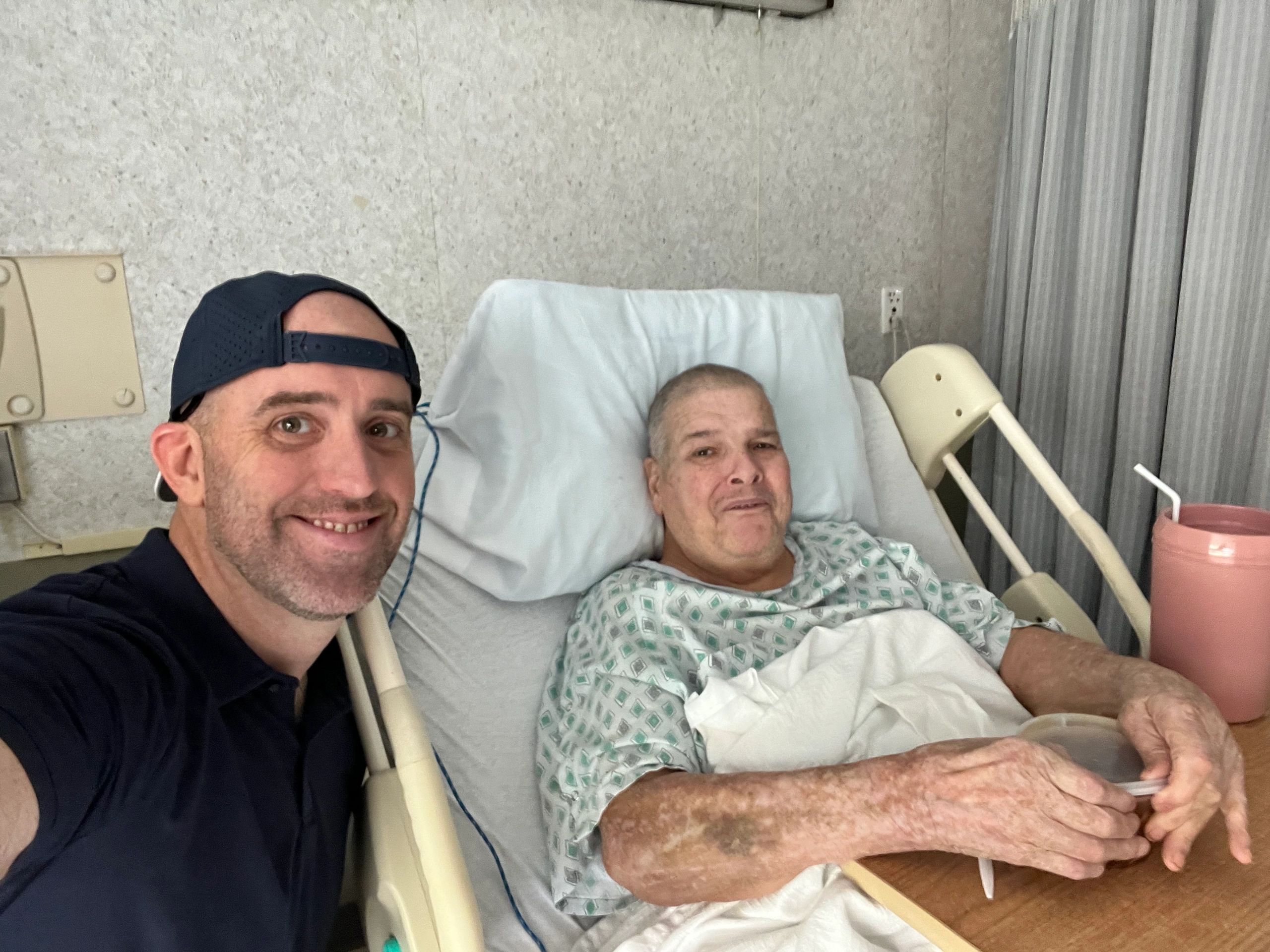
    This is me visiting my dad today in the facility he’s spent the last few weeks in. After years of dealing with depression, alcoholism and worsening neuropathy he had a fall that resulted in a broken shoulder. Falls aren’t uncommon for him, they usually lead to an ambulance visit and ride to the ER, but this one was different. He already required almost total care support at home from his wife but she simply can’t do it any longer.

    After going back home again after the shoulder brake a readmission was needed simply because he should have never been discharged home and his PCP said that was the ONLY way to get a referral to the needed place of treatment. This readmit led to a discharge to a SNF for rehab/therapy services. After 3 weeks in the SNF, I received a call and letter from the utilization management company his Medicare Advantage plan outsources this service to. It said that he no longer needs constant care and therefore they were stopping coverage for his stay and therapy.

    I can assure you he does in fact still need consistent care as he’s unable to get out of bed. He can not toilet himself even struggles to eat due to lack of mobility of his shoulders and arms. I appealed the decision but that too was quickly overturned.

    While the decision and letter are frustrating as it shows a complete lack of understanding of the situation. What is most concerning is the total lack of care management support, discharge planning, transition planned, you name it. Neither the facility, the MA plan or the outsourced vendor have offered any support. All I’ve been told is that we won’t “kick him out” because they know he’d be homeless but that means a $307 per day private pay stay until all of his money is gone and he can qualify for Medicaid.

    While I’ve found myself in the caregiver position, I’ve learned a lot being on the patient side of these decisions. I’ve learned how complicated it can be to get someone on Medicaid. I’ve learned about countless other things. But what I’ve also experienced is the deep need that many many many seniors have in what can be the most scary and critical time of their lives. This is way more complicated that’s it needs to be.

    I’m fired up more than ever to build a better healthcare solution that provides a more caring member and patient experience. We can and will do better!

    More to come on this journey as I continue to hear and learn how many people struggle with these challenges.

  • Today’s CFO role is different…

    I used to have a very different perspective of what it meant to be a CFO while I was in college and even very early in my career. I mostly saw it as an accounting role that closed and books and helped the company see out of the review mirror. Being someone that really like to be involved in strategy, preparing for the future and using financial data to tell a story, I never thought it would be a role for me. Even when I finished my undergrad with a major in finance and started on my MBA, there was an opportunity to double up on the masters program for a more finance focused program geared toward future CFOs and I simply wasn’t interested. I’m very happy I kept on the track though because I sure ended up being very wrong!

    Pretty much my entire career has been spent in some type of financial role. Even my internships were financial and investing focused at Invesco and Aegon Institutional while also working in a local bank through college. I got my first salaried job before I even graduated at a local hedge fund as a trader on the European desk and then moved to the sales side trying my hand in financial planning at AG Edwards and Sons. I later moved on to be an analyst in the treasury and investment department at Humana before being asked to take on a consultant role working to revamp Humana’s cash posting operation. From there I had an opportunity to be a branch manager at National City Bank. I ended up back at Humana after a couple years in the Medicare Finance organization before being asked to help seed a new finance team tasked with standing up a new region within Humana. After getting that region going and growing it to 2 states, I was promoted to the divisional finance team where I worked to develop new reporting and analytics tools to help providers take on value based care. I was then promoted to regional CFO where I got to get really involved in the operations of a region. Everything from BIDs, budgets, value based relationship management, MRA, Stars and everything else that makes a Medicare Advantage plan perform.

    What happened next was really a culmination of all of that experience which was a chance to be CFO and COO for a Medicare start up inside of Humana. The role and opportunity really helped me see what it was like to build something from the ground up. And to see how a stategic thinking CFO that was focused on performance, culture and leadership can really play such a critical role in the success of an organization. After serving in that role for 3.5 years I took a chance at a CFO role at a real start up, Honest Medical Group where I am today.

    I’ve learned so much through my 20+ year career about business, leadership, finance and so much more. But what I’ve really come to appreciate about being a CFO is that it’s so much more than I ever thought that it was. Being strategic, knowing the operations, being a key leader of the executive team and getting to work alongside some amazingly smart people is really something that so very few get the chance to do. Being a CFO is NOT about looking in the rear view mirror, it’s not about just closing the books and handling accounting type work. It’s so much more than that. So if you have interest in becoming a CFO, learn the operations, learn what makes the company tick, learn about strategy and how all of these things impact the financial performance of a business. You will be better for it and have even better opportunities to reach your goals and help your business reach it’s goals.

    If you’d like to learn more about my experience or just have questions about your own path, reach out, I’d love to share, coach, consult or help in any way I can.

    Dave

  • Taking Breaks

    I recently took a week away from the office to take my family on a spring break trip. I’m lucky to have a leader and a team that supports this. One thing I’ve learned through my 20+ year career is that there is NEVER a “good” time to take vacations and to truly unplug and I’m one of the most guilty people about not taking PTO. There is always more work to be done then there is time to do it. Those expectations only intensify the higher up you climb. The next fire drill, the next important meeting, the next presentation, the next budget, the nexts just continue. Because of this, it’s more important than ever, as MJ would say to “Just Do it”. These are my top 5 reasons it’s important to take time, especially if you have a family.

    You’ve only got 1 family and 1 lifetime

    Your family needs you a lot more than your job needs you. Marriages take effort, raising kids takes effort and having healthy relationships take effort. This effort can not be the leftovers because all your effort was all spent at work. This is time and investment that will have a greater ROI than anything you do professionally. I’ve seen both sides, I struggle with this in a big way. I often feel guilty about my family getting the leftovers. I’m sharing this as a way to challenge myself but also encourage others.

    Time is the only resource we can’t make more of

    One of my favorite quotes is that it’s not the years in your life that matter, it’s the life in your years that counts. I have to remind myself of this constantly. Saying that I’ll do that tomorrow, or we’ll take that trip next year or in 5 years. Whatever your time box is and the reasons for it, tomorrow is not promised. I do not want to look back at my life with a lot of I wish I would haves. I’d much rather look back on my life with a lot of, wow, I can’t believe I did that’s.

    The work will be there when you get back (most of the time)

    Most important work related activities don’t come and go in a week. Some do, but that is where the value of a team and the benefit of leadership can really be fruitful. Being a good leader means engaging and involving your team. It means helping those on your team develop the tools so that they can step up and fill in if it’s needed. It means having the faith and the trust in your team, your peers and your leaders that most things can be covered while your out.

    Breaks are good for your mental health

    Taking a break to reset and recharge have proven to increase performance. Stepping back for a bit can give you new perspective. It allows you to see how things go while your away. It allows you to see folks true colors. It also lets you clear your mind, find fresh ideas, get excited about jumping back in and importantly a feeling of appreciation.

    Be the leader that encourages and celebrates these breaks

    Todays workforce is extremely competitive. Top talent can find jobs faster and easier than ever before. People want more than anything to feel appreciated and supported. Be a leader, be an organization, be a culture that celebrates peoples value and life outside of the the business. When people feel supported and valued, not only will they stay longer but they will work harder and give more. Be the leader that not only supports but models these traits, your business will benefit from it. I guarantee it.

  • New Adventure

    Today (2/24/22) is officially my last day at Humana. I will be forever grateful for the relationships, friendships, mentorships and more that I’ve experienced during my 17 years. In addition to the people, I’ve had incredible opportunities to learn and grow in a number of roles across the organization. I’ve been blessed with great leaders and teammates all along this journey and I’m hopeful our paths will cross again.

    I have received so many notes of congratulations, encouragement and gratitude. Knowing that I’ve had an impact on peoples lives as a leader and colleague helping them progress in their own careers and life is really what’s its all about. I love business, I love our customers and the mission but above all of that are the people that make it all worth it.

    With that said, I’m extremely excited to share that I am joining the talented leadership team at Honest Medical Group a Rubicon Founders portfolio company as CFO. I’m grateful for the opportunity to be a part of this team that’s focused on building products and services that focus on improving care and member satisfaction while reducing costs for people with Medicare.

    Here’s to new challenges and new beginnings!