Category: Endurance & Discipline

  • Week 11, random Tuesday


    People sometimes ask about my Ironman races — what the hardest part was.

    They expect me to say the marathon at the end, or the 4am training swims, or the last twenty miles on the bike.

    It’s none of those.

    The hardest part is Tuesday. Some random Tuesday in week eleven of training, when nobody’s watching, the race is months away, and the alarm goes off at 5am in the dark. The whole thing is won or lost right there.

    I’ve been thinking about discipline a lot lately, because I’m watching it show up in my kids.

    My son is chasing college football and now talking about endurance races of his own. My daughters have put thousands of unseen hours into dance and music. Nobody assigned them that work. They caught something, somewhere along the way.

    Here’s what two decades of leading teams, raising kids, and racing long distances have taught me about discipline:

    It’s one muscle. The discipline that gets you out of bed for a training swim is the same muscle that prepares you properly for a big meeting, keeps a promise to your spouse, and closes the laptop when your kid wants to talk. Strengthen it anywhere and it shows up everywhere.

    It compounds quietly. No single 5am alarm matters. The five hundredth one changes who you are.

    And it’s the price of everything you say you want. The career, the health, the marriage, the faith that actually holds under pressure. None of it stays standing without the boring, repeated, unseen work.

    Motivation gets all the attention. Motivation writes the goals in January.

    Discipline is still there on the random Tuesday in week eleven.

    That’s the whole difference.

  • Why Athletes Make GREAT Hires in Business

    Introduction

    Athletes know what it takes to win both on the field and in the workplace. The same mindset that drives success in sports can be a game-changer in business. Whether it’s the ability to set goals, handle pressure, work as part of a team, or understand failure, former athletes bring a unique set of skills that make them some of the best hires in any industry.

    1. The Power of Discipline and Consistency

    Athletes train daily, often sacrificing short-term comfort for long-term success.

    In business, this translates to:

    • A strong work ethic and commitment to continuous improvement.
    • The ability to show up and execute, even on tough days.
    • A deep understanding that success is the result of consistent effort over time.

    2. Handling Pressure and Performing Under Stress

    Game-winning shots and high-stakes negotiations have one thing in common : pressure.

    Athletes develop:

    • A high level of composure in fast-paced, high-pressure environments.
    • The ability to think strategically and execute under tight deadlines.
    • Resilience in the face of setbacks and failures.

    3. Goal-Setting and Performance Tracking

    Athletes don’t just train, they track progress and make adjustments.

    This mindset applies to:

    • Setting measurable business objectives and staying accountable.
    • Continuously evaluating and optimizing performance.
    • Taking feedback constructively to improve outcomes.

    4. Leadership and Teamwork

    Great teams win championships, and great companies succeed through collaboration.

    Athletes understand:

    • The importance of communication, accountability, and shared success.
    • How to lead by example and push teammates to perform at their best.
    • The necessity of adapting to different roles for the greater good.

    5. Competitiveness and Drive

    Athletes hate losing, but more importantly, they love winning.

    In business, this manifests as:

    • A natural hunger for results and continuous improvement.
    • The ability to push through challenges instead of quitting.
    • A strong focus on both personal and company-wide success.

    Conclusion: Why Companies Should Prioritize Hiring Athletes

    If you’re looking for employees who are disciplined, resilient, and team-oriented, former athletes should be at the top of your list. Their ability to handle pressure, adapt, and work toward goals makes them invaluable in any business setting.

    In my life, I’ve experienced this with myself, coworkers, people I’ve hired, my family and in my community. I’ve personally learned through training for and racing in triathlons while also nurturing a career and being a husband and dad. To do this and achieve my goals, it required discipline, planning, lots of hard work, commitment. It goes beyond “motivation” as that can come and go and really becomes who you are.

    Call to Action:

    Have you worked with or hired former athletes? What strengths have you seen them bring to the workplace? Let’s discuss!

  • The Mental Benefits of a Health and Fitness Routine

    In today’s fast-paced world, maintaining mental well-being is as crucial as physical health. One powerful way to nurture both is through a consistent health and fitness routine. While the physical benefits of regular exercise are well-documented, the mental advantages are equally significant and transformative. Let’s explore how a health and fitness routine can enhance your mental health.

    1. Stress Reduction

    One of the most immediate mental benefits of exercise is stress relief. Physical activity increases the production of endorphins, known as the brain’s feel-good neurotransmitters. Whether it’s a brisk walk, a vigorous gym session, or a calming yoga practice, exercise helps reduce levels of the body’s stress hormones, such as adrenaline and cortisol. This natural reduction in stress can lead to a calmer, more relaxed state of mind.

    2. Improved Mood

    Regular physical activity can significantly boost your mood and overall sense of well-being. Exercise has been shown to alleviate symptoms of depression and anxiety. This is partly because exercise promotes changes in the brain, including neural growth, reduced inflammation, and new activity patterns that promote feelings of calm and well-being. Moreover, exercise can be a powerful way to distract yourself from negative thoughts and break the cycle of negative thinking.

    3. Enhanced Cognitive Function

    Engaging in regular physical activity can improve cognitive function and help protect memory and thinking skills. Exercise increases blood flow to the brain, which can help improve overall brain function. It also stimulates the release of growth factors—chemicals that affect the health of brain cells, the growth of new blood vessels in the brain, and even the abundance and survival of new brain cells. This can result in better focus, improved memory, and sharper mental acuity.

    4. Better Sleep

    A health and fitness routine can also lead to better sleep patterns. Physical activity increases the time spent in deep sleep, the most physically restorative sleep phase. Getting enough high-quality sleep can help improve mental clarity, mood, and overall well-being. Just be sure to time your exercise right, as exercising too close to bedtime may interfere with your sleep for some people.

    5. Boosted Self-Esteem and Confidence

    Regular exercise can also improve self-esteem and confidence. As you achieve fitness goals and see improvements in your physical health and appearance, you can gain a sense of accomplishment and self-worth. This boost in self-esteem can positively impact various aspects of your life, from personal relationships to professional endeavors.

    6. Social Interaction

    Many fitness activities provide opportunities for social interaction. Whether it’s joining a fitness class, a sports team, or even just going to the gym, these activities can help you connect with others. Social interaction can reduce feelings of loneliness and isolation, contributing to better mental health.

    7. Resilience to Mental Fatigue

    Regular physical activity can increase your resilience to mental fatigue and improve your overall mental stamina. This means you can better handle the mental demands of daily life and stress, leading to enhanced productivity and a more balanced lifestyle.

    Conclusion

    Incorporating a health and fitness routine into your life can offer profound mental benefits. From reducing stress and improving mood to enhancing cognitive function and boosting self-esteem, the positive effects are extensive. Prioritizing regular physical activity can be a transformative step towards achieving better mental health and overall well-being. As someone who has been on and off during my life regarding a solid fitness routine, I can say with 100% certainty that the periods of time where I made this a priority I was much happier, more productive and less stressed feeling. As a busy executive, husband and father it’s often challenging to find the time. But what I’ve learned is that its really not an option and I want to be around to see my kids grow old and have a very long time to enjoy my marriage with my wife. So, lace up those sneakers, find an activity you love, and start reaping the mental rewards today!

  • Some Days…

    For this weeks entry I’m doing something a little different. I enjoy doing the blog thing, I enjoy talking about and sharing perspective on leadership. But some days, some weeks It feels more forced than not. This is one of those weeks. I have a topic to discuss and share, I have some insights to put out there but for some reason I’m not feeling it.

    So instead, let’s talk about how normal that is? How as an introvert it takes a lot of energy to put yourself out there. To show up as a leader the way your team, family, friends and others need you and deserve from you. At the same time, when I get into this “not feeling it” mode I do a lot of thinking, 2nd guessing, questioning myself and challenging where I am in life.

    I get deep into what is my true purpose, what is it that I‘m passionate about? Why is it so freaking hard to answer that question and figure this out? Why do I feel at 42 years old that I haven’t figured any of this out and that I really need to? Why does it pull me down into a rabbit hole of sorts that usually ends in me just moving on or getting distracted by something else?

    I’ve tried a lot of things, I’ve tried hobbies, blogging, podcasting and jobs. I’ve done Ironman’s, great jobs, bought nice cars, bought nice watches, moved homes, been in and out of church and a deeper relationship with Jesus. At the end of the day some days, I just haven’t been able to feel like I was on the right track consistently, kick the feeling that I was meant for more or at least something else, that I am supposed to be doing more with life.

    But then, it hits me, these feelings, these weeks are 100% normal and the best leaders, the most successful people work through them and come out the other side even better. Sometimes it’s a motivational video, quote, chat with a friend, family member, mentor or team mate that wakes you up. Reminds you of all the impact you’ve already made and for me I’m back in the game. Motivated and ready to go.

    I trust that I’ll figure it out, that I’m on the right path and that by being curious about life and experiences, I will find my way. That being the best husband, dad, brother, son, friend, team member, leader and more that I can be will lead me to the place I’m meant to go. It’s a journey and I want to enjoy every step and twist and turn along the way. I’m extremely grateful for my life!

    I put this out there this week because I’d love to hear from you and if/how you think about life? Do you go through these times, have these thoughts? Have you figured it out? Reach out because I’d love to hear about it.

    Dave

  • 5 Steps for Effective Goal Setting

    Goal setting is a great way to push us towards success and achievement. As a leader, mastering goal setting is important for both personal growth and organizational success. In this post, we will explore five essential steps for effective goal setting, providing you with valuable insights to set and achieve meaningful goals.

    1. Clarity is Key:

    The first step in goal setting is clarity and don’t over complicate it. Clearly define what you want to achieve and why it matters. Make your goals specific, measurable, achievable, relevant, and time-bound (SMART). The more specific, the easier it becomes to develop a focused plan.

    2. Align Goals with Vision and Values:

    Ensure your goals align with your vision and values. Your goals should reflect the long-term aspirations of yourself, team or organization. When your goals are in harmony with your purpose and values, they become a source of inspiration, motivating you and your team to persevere through challenges.

    3. Break it Down:

    Breaking down bigger goals into smaller, manageable milestones is a game-changer. It gives you a clear roadmap for progress. Each milestone achieved brings a sense of accomplishment, keeping you and your team motivated to take the next step.

    4. Monitor Progress and Celebrate Success:

    Tracking progress is essential for goal achievement. Regularly review your milestones and adjust your plan if necessary. Celebrate successes, no matter how small, to acknowledge the hard work and dedication of your team. Positive reinforcement keeps motivation high and creates a culture of achievement.

    5. Learn from Setbacks:

    Recognize that setbacks are a natural part of the goal-setting journey. Instead of viewing them as failures, treat setbacks as valuable learning experiences and CELEBRATE them as well. Analyze what went wrong, identify areas for improvement, and use this newfound knowledge to make informed decisions moving forward. If you aren’t failing along the way, there is a chance you aren’t pushing the boundaries enough.

    In summary, effective goal setting is the compass that guides us towards our desired destination. By ensuring clarity, alignment with vision and values, breaking down goals, monitoring progress, celebrating success, and learning from setbacks, you set yourself and your team up for resounding success. Embrace the power of goal setting, and witness how each milestone achieved brings you closer to your aspirations and dreams.

  • Taking Breaks

    I recently took a week away from the office to take my family on a spring break trip. I’m lucky to have a leader and a team that supports this. One thing I’ve learned through my 20+ year career is that there is NEVER a “good” time to take vacations and to truly unplug and I’m one of the most guilty people about not taking PTO. There is always more work to be done then there is time to do it. Those expectations only intensify the higher up you climb. The next fire drill, the next important meeting, the next presentation, the next budget, the nexts just continue. Because of this, it’s more important than ever, as MJ would say to “Just Do it”. These are my top 5 reasons it’s important to take time, especially if you have a family.

    You’ve only got 1 family and 1 lifetime

    Your family needs you a lot more than your job needs you. Marriages take effort, raising kids takes effort and having healthy relationships take effort. This effort can not be the leftovers because all your effort was all spent at work. This is time and investment that will have a greater ROI than anything you do professionally. I’ve seen both sides, I struggle with this in a big way. I often feel guilty about my family getting the leftovers. I’m sharing this as a way to challenge myself but also encourage others.

    Time is the only resource we can’t make more of

    One of my favorite quotes is that it’s not the years in your life that matter, it’s the life in your years that counts. I have to remind myself of this constantly. Saying that I’ll do that tomorrow, or we’ll take that trip next year or in 5 years. Whatever your time box is and the reasons for it, tomorrow is not promised. I do not want to look back at my life with a lot of I wish I would haves. I’d much rather look back on my life with a lot of, wow, I can’t believe I did that’s.

    The work will be there when you get back (most of the time)

    Most important work related activities don’t come and go in a week. Some do, but that is where the value of a team and the benefit of leadership can really be fruitful. Being a good leader means engaging and involving your team. It means helping those on your team develop the tools so that they can step up and fill in if it’s needed. It means having the faith and the trust in your team, your peers and your leaders that most things can be covered while your out.

    Breaks are good for your mental health

    Taking a break to reset and recharge have proven to increase performance. Stepping back for a bit can give you new perspective. It allows you to see how things go while your away. It allows you to see folks true colors. It also lets you clear your mind, find fresh ideas, get excited about jumping back in and importantly a feeling of appreciation.

    Be the leader that encourages and celebrates these breaks

    Todays workforce is extremely competitive. Top talent can find jobs faster and easier than ever before. People want more than anything to feel appreciated and supported. Be a leader, be an organization, be a culture that celebrates peoples value and life outside of the the business. When people feel supported and valued, not only will they stay longer but they will work harder and give more. Be the leader that not only supports but models these traits, your business will benefit from it. I guarantee it.

  • The Growth Mindset & Why it Matters

    Almost 4 years ago I had the opportunity to do something new in my career. I got to become the COO/CFO for a start up within the large company I had 14 years working in. I knew this would be a significant change for me, I knew it would be challenging, I knew it wasn’t safe but what I didn’t fully appreciate was the amount of change it would do for me. It was scary, it would take me out of my comfort zone and push me in ways I’ve never been pushed. What I’ve also experienced through his is how important mindset is. Being open to that challenge, excited about it, starting with a beginners mindset and embracing a growth mindset has been a game changer for me. I’m not the same person, leader or employee that I was 4 years ago and I want to share a little about what I mean by that.

    Something I’ve always tried to embrace is “rethinking routine”. Which means I love to ask why we do things. Why we do them at all, why we do them certain ways, is there a better way or a better thing? I tend to get bored easy and I don’t like feeling in a rut, so shaking things up is a natural tendency I have. In business, I’ve found this to be a successful part of my career journey. It’s really easy to for people, teams and organizations to get into a rhythm of process. The challenge with that is that our world changes so rapidly, this can easily mean you find yourself behind. Behind in technology, efficiency and organizational design including talent. Being open to and embracing this fact allows you to see and address things starting with curiosity. If you don’t try to disrupt yourself every single day in business, someone else will. Which is at the heart of a beginners approach and feeds the growth mindset.

    The reason I call this out as mindset is because I believe and studies show that it is in fact a mindset characteristic. Luckily this mindset can be built, grown and nurtured. Individuals can of course take this on themselves but it’s drastically more successful if it’s supported by the organization and its leaders. Meaning that rethinking routine is celebrated and not criticized. This feeds a culture of safety vs. a culture of fear. It takes mature and strong leaders to accept and embrace when their world is challenged. But leaders that can do that and do it successfully, build a culture that is fired up for it. When your team members not only feel welcomed to question things but actually expected to. The level of freedom, empowerment and buy-in explodes.

    I’ve luckily embraced this in just about every role I’ve had. Which has often then led me to the next role. But none more so then when I had the opportunity to start a start up within my company. Myself, my peers and our teams were given the task to 100% focus on the member fist and challenge everything we knew about how things were done today. Some of those things were excellent, absolutely no reason to change, best in class. But in many cases, there was a better way to organize, better technology to use, better processes to implement. All building toward a better way to serve our customers, which was 100% our focus. This opportunity was sparked by our leader, who on my very first day handed me a book and said read this. It was a book called “Start with Why” by Simon Sinek. That gesture, that book, that push from my new boss at the time sparked something in me. I felt a new level of push to not only embrace this mindset, but lead and build a team where this was deeply embedded in our culture. It also kicked off a new burning desire to learn more and since then I’ve ready over 50 books and listened to countless podcasts relating to this topic.

    I’d be remiss to suggest this was easy and not something that has gotten even harder the longer we exist and the bigger we get. But even to this day, almost 4 years later, it still sits at the epicenter of how we act and what we do each day. The mindset allows us to navigate the hard days, the challenges and see them as opportunities to learn and improve. I’m forever grateful for that leader, the push and this opportunity. I’m excited about the future and continuing to build and grow this mindset wherever it may take me.

    I ask you to lean into learning about the growth mindset. There are great books and podcasts on the subject. It’s not only great for business but in your personal life to. As a husband, father, son, friend, mentor, mentee, you name it. If you can embrace being open to other views, opinions, ways of doing things. If you see challenges as opportunities instead of blockers and start with “why” and “curiosity” the growth and happiness you will experience is something I can’t wait for you to tell me about, because it will come.

  • My 2013 Ironman Louisville a Story of GRIT

    I had a phase in my life where competing in triathlons and running races was something I spent a considerable about of time, money, energy and focus on. The sense of accomplishment the challenge and growth from them was something that spilled over into the rest of my life as well. I’ve completed 2 full Ironmans, both in Louisville in 2012 and 2013. An Ironman triathlon consists of a 2.4 mile swim followed by 112 mile bike ride and they are capped off with a 26.2 mile run. They give you about 17 hours to complete the event. As challenging as that sounds, the year long training routine leading up to it is actually where all the magic happens. The early morning wake ups for swims or runs in the dark. The late evening bike rides or runs on the treadmill. The 2 a days of doing both of those things. All while trying to have a career, be a husband and a dad. Todays blog is my story of the 2013 Ironman, it didn’t go down like I had hoped and as disappointing as that day was, I’m grateful for the experience.
    WAKE UP

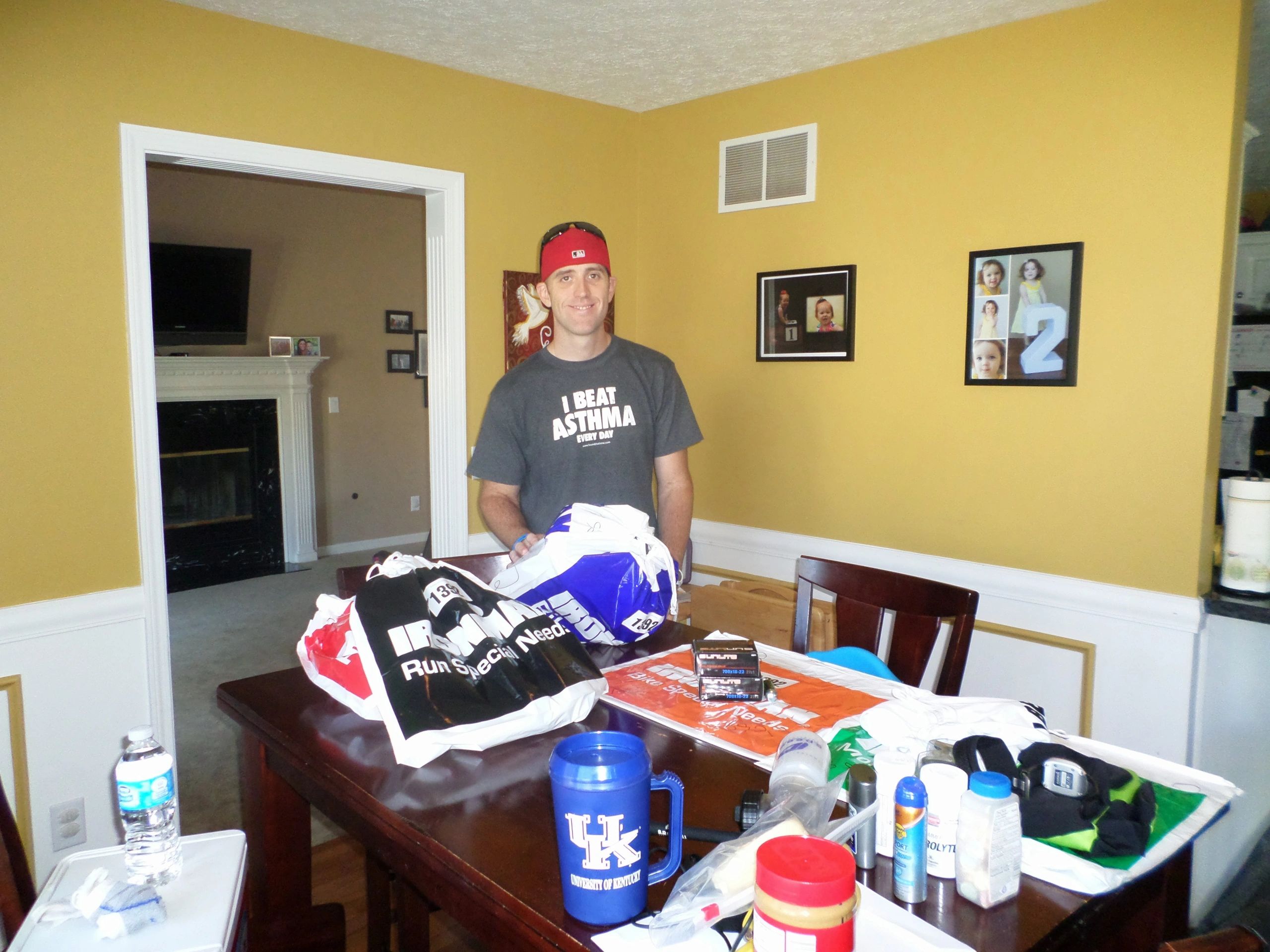
    As with most race days it gets going EARLY. Double checking all your gear, nutrition just making sure you got all your stuff together for a long day. You also have to get your morning food (fuel) dialed in so you know what works for your stomach and can sustain for a while. Then you make your way down to the first transition zone (which happens to also be the 2nd for this race) to set up everything you need for when you get out of the swim. This includes getting your bike shoes set up, helmet, glasses, bottles, nutrition for the bike, extra tubes and everything possible to make sure you get through that 112 mile ride. You also get your run stuff set up so that you can be as quick and efficient as possible when you get off the bike to head out on the run. Once you get all of that set up and ready to go, you make your way down to the swim start and wait for the start.

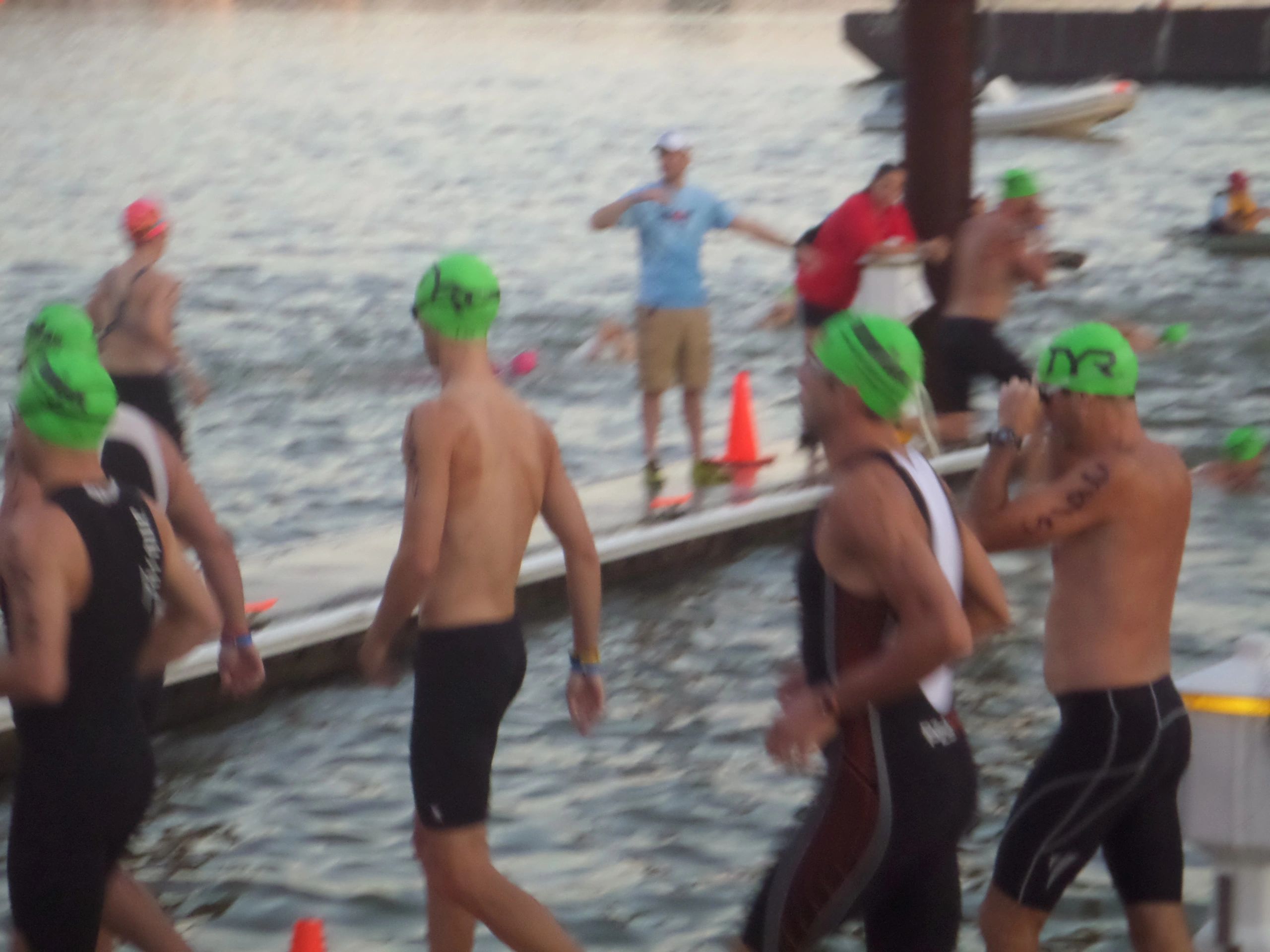
    In Louisville, the swim start is single file and a decent little walk from the transition area. This is honestly one of my favorite parts of the day. My wife made that walk with me both years, other family comes down to wish you luck, you see friends, training partners and other competitors. The nerves are legit knowing you put in all that work for this day. The hay is in the barn as my buddy Kevin used to say and it’s time to party. But holy moly I could feel it in my gut. That time from getting in line to when the start officially gets going feels like forever. Then once the gun goes off, you take the slow sludge toward the dock for your turn to jump in and get after it. For some reason, both years, I really had to pee. I’ve learned that it’s darn near impossible to pee while swimming, which seems weird but is very true. So I had to take care of that at the last minute which isn’t super cool.
    SWIM START

    Now you are on the dock, staring at the water and all the nerves are gone. It’s go time and there is no going back. This race was going to be a badass race. My training leading up to this day, all my prep races were all FAST for me. I was setting PRs, super lean, felt fast and I was pumped to knock a ton of time off my prior year. Confidence was very strong until about 500 years into the swim. I started having cramps in my feet almost immediately. It was brutal as I couldn’t point my toes or kick with my feet at all. The only way to fight it off was to pull my toes toward my knees. Which was like putting on the breaks in the water. Those cramps started creeping into my calves before I was even 25% into the swim and I started to panic. There just happens to be a shallow part of the Ohio River right about at that spot, so I stood up thinking I could stretch them out. Wow was that a bad idea. When I stood up both legs, complete cramps from top to bottom. A safety guy on a canoe happen to see what was going on and said he was going to pull me out. The only thing I could think was no way in HELL are you pulling me out and I took off swimming.

    The cramps never went away, I dealt with them for about an hour swimming 2.4 miles in the Ohio freaking river. I kept a constant eye on where the safety team members were, just in case I needed to scream for help. I would rotate to my back and float at times when it got really bad. I one point I got so lost in the situation I was in the middle of the river and WAY away from the shore or the nearest competitor. I had some real talk with God that day. I made lots of promises, shed some tears. Thought about my family if I was to drown and how selfish it was I was out here doing this, spent all that time training and here I am thinking about my wife being husbandless and kids being fatherless. Holy moly that was some emotional stuff I went through that day. I also battled with what happens if I have to quit and all these people that were coming down to support me. All the folks that had supported me the entire way. All I kept saying is that I am not a quitter, not today, I’m going to GRIT this thing out.

    Some how I made it to the swim finish, climbing out of the water I felt like I could barely walk. My legs felt like I had done a million squats and all I thought about was how am I going to finish this thing. Then my eyes caught the clock and somehow I was 9 minutes faster than last years time. I knew it was because of the current, but I didn’t care and all of a sudden my legs felt fine. I started jogging to the bike and it was like a fresh start. I couldn’t believe it and with a new found energy I was ready to hit the bike!
    To the BIKE

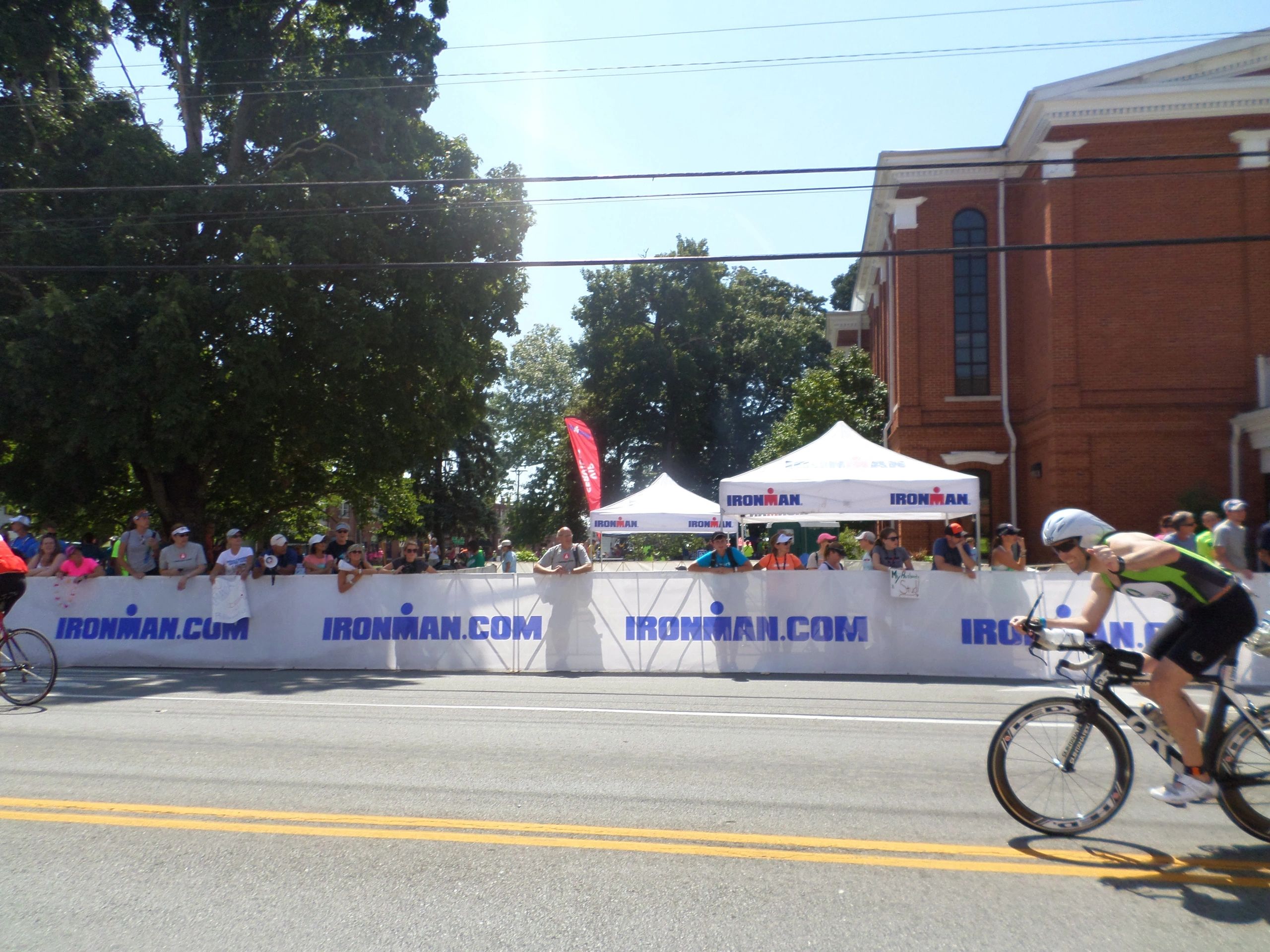
    Making a good transition I was heading out on the bike and was going WAY to fast. I had a plan for a pace out of the gate, it’s super flat to start in Louisville and it’s easy to burn yourself up early. I was purposely making myself go slower than I wanted but was flying and felt like I wasn’t even trying. It was a crazy feeling. Next thing I know I’m at the out and back section of the course which has a really steep valley on it. So you fly down at first, climb up then turn around and do it again. On my way climbing out the valley a guy coming the opposite way hit the pavement hard. Maybe the worst crash I’d seen in a race. His helmet was busted, there was blood on the ground and an ambulance was making it’s way through the race crowd to get to him. Many of the same emotions from the swim started flooding back in. I was questioning everything that day, why am I doing this, how could I put my family thought this, ugh it was tough. But I got through that and kept pushing.

    Still feeling pretty good I’m on the loop in Oldham County at this point. There is an up coming aid station and I need to refill my water and grab some food. Another thing about Ironman races is that you really don’t ever want to stop or slow down all that much in reality. For me, stopping makes it really hard to get going again. So my goal is NOT to get off that bike the entire time. So as you roll into an aid station you slow down, get over to the right and hold your hand out. The amazing volunteers and will hand you what you need as you go past. It’s pretty awesome really how easy it is and how hard they work to help the athletes. I’d done this dozens of times during my races and never had a problem. On this particular day, someone in front of me decides to take a hard left turn. This results in him slamming into my front wheel while I only have 1 hand on the bars. This sends me FLYING over the handle bars, landing square on my should with all of my gear sent flying through the air.

    I land hard, slide across the asphalt and immediately think, what in the hell just happened. My next immediate thought is holy crap I’m on the ground, my bike looks twisted up and my stuff is all over the place. I’ve got one of those volunteers trying to help me up, get my stuff and wanting me to come to the side so they can check me out for injuries. He looked terrified in his eyes, was looking at my shoulder and trying to hold me. As much as I appreciated the concern and all the help all I could think was holy crap I have to get going. He tried to convince me to stop, check my bike, check my body but I was like nope, gotta go. As I’m getting going again I’m checking over my bike for loose parts, bent parts, broken parts and for the most part everything seemed fine so I was back after it. It didn’t take long for my shoulder to start hurting and the road rash to start burning. It made it hard to stay in the proper aero position and get comfortable again and I still had a LONG way to go. The emotions started flooding back in, my back really started to hurt and I knew it was going to be a REALLY long rest of the race.

    Part of the Ironman bike course goes through a town called Lagrange. In the middle of town is a place a lot of families come to cheer you on. Usually its a major lift in energy and emotion to see folks out there cheering for you, spending their time to do all they can to show you love. This year, on this lap it almost broke me. I saw my family, friends and people cheering, with matching t-shirts and signs and I immediately started crying, I wanted so bad to stop the bike and get off to hug someone. It had been an emotionally and physically challenging day already and I still had a really long way to go. But like the swim, I kept pushing and after what felt like an eternity I made it to the bike finish. Somehow, again I was still ahead of last years time and I actually extended that advantage so I was ready to get after the run.
    Time to Run

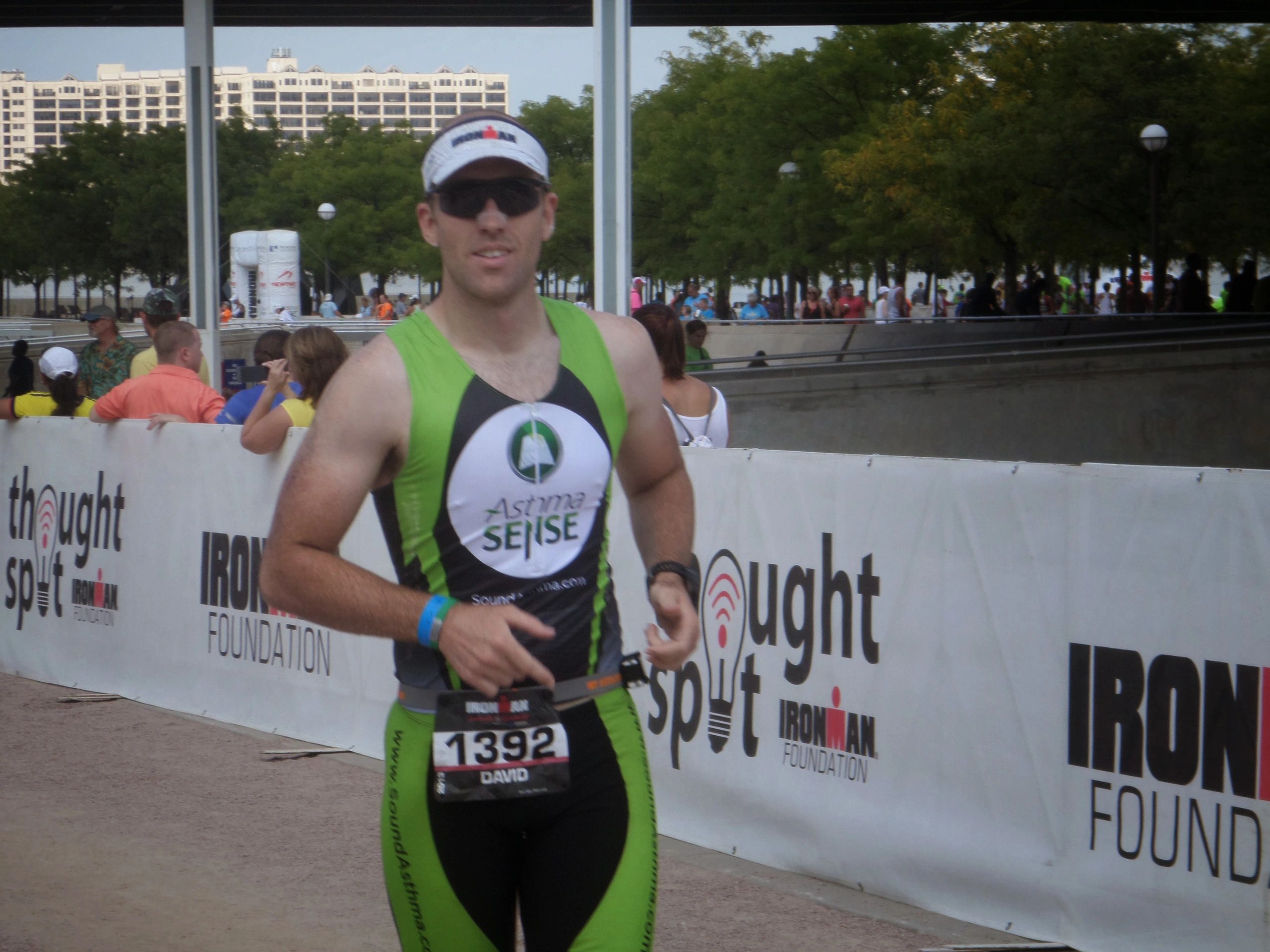
    Heading out on the run it was nice again to see my family, who still didn’t know about all the challenges I’ve had. I didn’t say anything and tried to hide the road rash. I knew people would worry and I didn’t want that, the day would be over soon enough and I could tell the whole story then. Right off the bat I felt great. Legs felt good and I was on a good pace. I was at about mile 5 and I hadn’t taken any walk breaks and thought it was probably time to walk through the next aid station to make sure I got in some gel and fluids. So that was my plan, I walked through the next aid station being very purposeful to get the fuel down. I went to start running again and I seriously couldn’t do it. My hips SHUT DOWN to the point it felt like the joints were going to freeze up. It was the craziest thing I’ve ever experienced running. I tried to run through it, job, walk/jog, nothing I could do was helping. It was depressing to say the least. I did my best to move as fast as possible but there just wasn’t much there. Luckily I met some other guy who was in a similar situation. He was a preacher from Georgia and had a thick southern accent and we paired up and pretty much walked the last 20 miles together. He really kept my mind off the pain and disappointment of the day. I’m pretty sure God sent him as I’m not sure how I would have managed those last 20 miles to be honest. We separated near the finish line and I did see him again, wish I would have gotten his name.

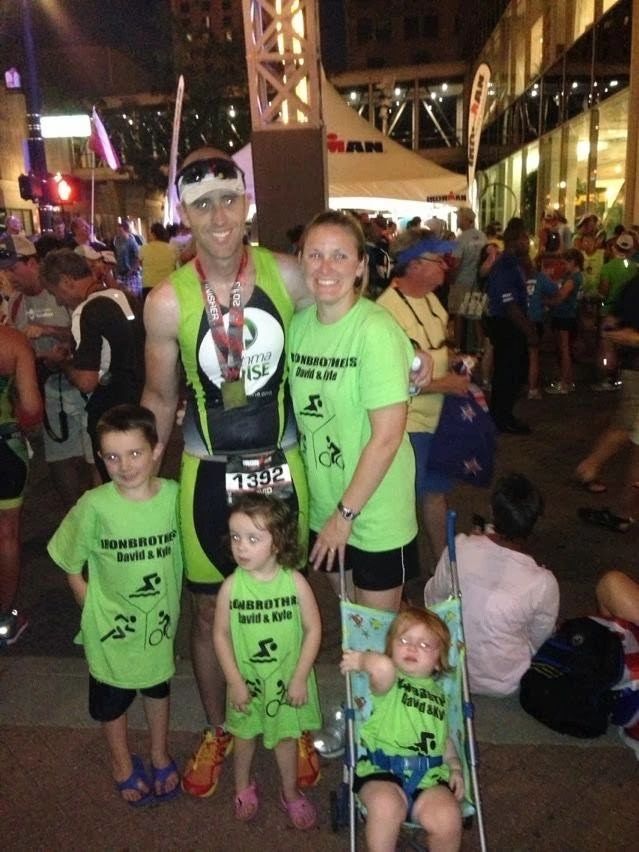
    At some point during he last 10 miles a friend of mine came out to see me. I told him about my day and the wreck and other craziness. Little did I know he shared that with the rest of my support crew so by the time I made it to the finish I think they all were in some mix of worried to death, thinking I was totally nuts or mad at me. haha. But coming down that finish line all I could think about was how I failed, didn’t hit my goal and was disappointed and embarrassed in my performance. My wife was the first person I remember seeing as I cross the finish line. Really the only thing I remember about that finish was falling into her arms and sobbing like a baby. She is my rock and that is a moment I will never forget. All she and my 3 kids felt were pride in me and thankfulness I was ok. I am a blessed man…
    Lessons Learned

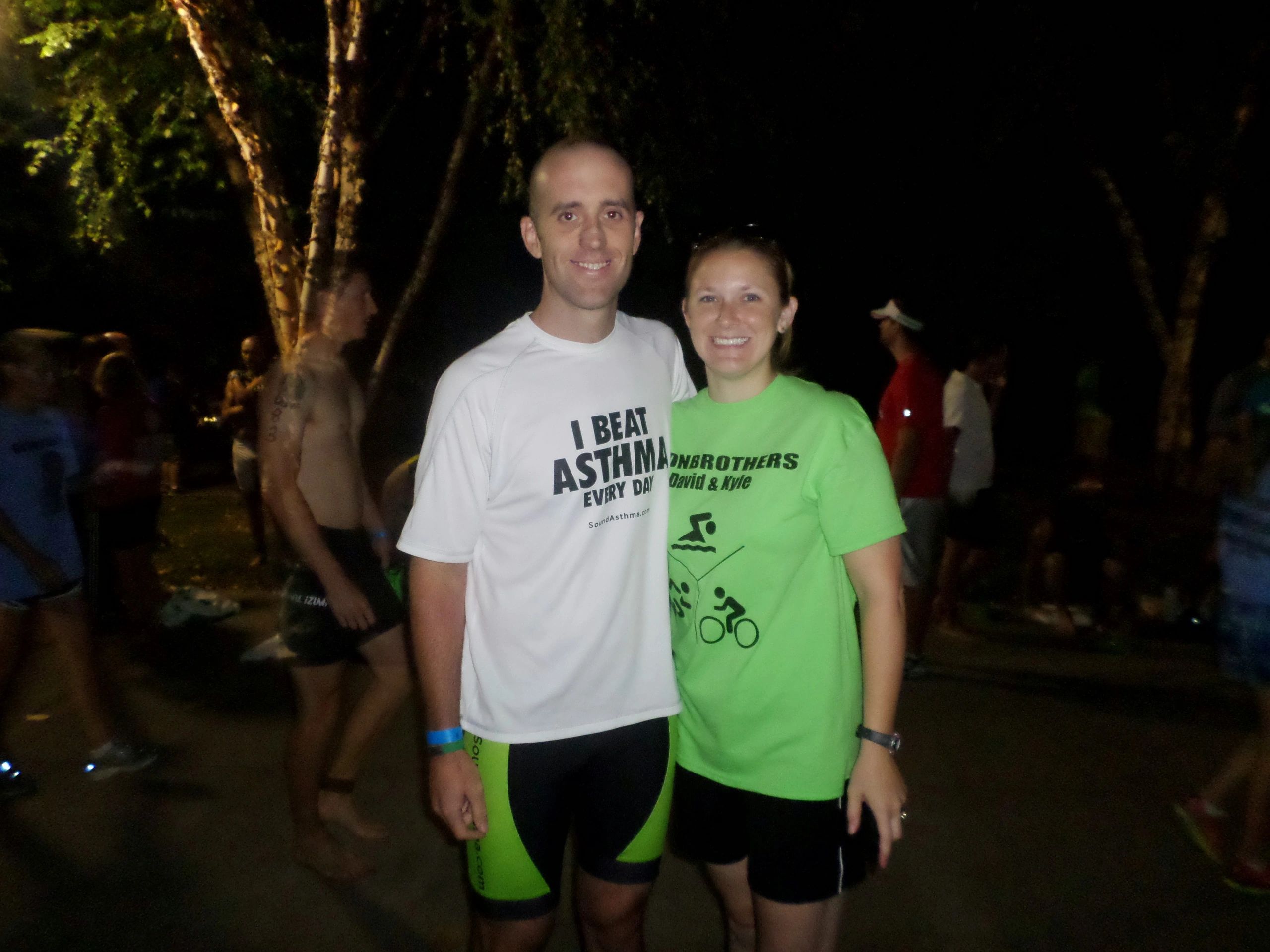
    Looking back on that day is emotional. It took me a while to get over the disappointment but after a while and after talking to some friends that disappointment started to change. I started looking at this day as a day that made me stronger. A day I could always look back on and be proud of. I pushed through things that many will never experience or push through. The toughness that I found that day sits in me today and I recall it regularly as a source of strength. Remembering that I can do absolutely anything I put my mind to. Challenges can either stop you or make you strong, I chose to use this one to make me stronger. GRIT is something that can be learned, experience, nurtured and grown. This was a GRIT day for me and I’m better for it.

    I hope you take from this memory the same thing I hope my kids take from it. NEVER EVER GIVE UP! You are worth it and you can accomplish amazing things if you just want it bad enough. Life truly does happen on the other side of your comfort zone, I know, I’ve been there.

    I’m targeting doing another Ironman when I’m 50. I have no idea why, but it’s a target on my list. Hopefully I’ll see you out there. And I won’t have crazy cramps or a wreck to tell you about.
  • Morning Routine

    COVID has touched our lives in so many different ways. From sickness, loved ones lost, jobs, education, freedom and more. It’s also given some an opportunity to step back and really look at their life. Their job situation, their health, their finances, their future, their day to day. Many have used this time to learn new skills or to grow in others ways. For me, it’s been a great time of reflection. The lack of needing to travel or commute for work as allowed me to really find a new focus in my life. I credit a lot of that to my daily morning routine and being purposeful and disciplined into building habits to support it. I’ve pieced mine together from several different books and other leaders to build what I believe works for me. I’ll share my routine and schedule below, but beyond the actual routine the benefits from this have been a renewed focus on my health (mental and physical). It’s also been a turbo charger for my productivity and drive. I highly recommend finding what works for you, get disciplined around it for a least 30 days and see how great you feel.

    5:00 – 5:45 AM – Wake up, COLD Shower, Breakfast and Coffee

    I’ve found waking up early, before anyone else in the house to be one of the most powerful actions you can take. This is a hard habit to form, getting out of bed on a cold morning when you really don’t have to, at times sucks. But when you so quickly start to see the benefits and the freedom you have during this time which then unlocks more time later in the day. You will start to love and enjoy these early hours.

    After waking up, first thing I do is jump in the shower. For me its the best way to start the day. I start off with hot water to settle in and lather up. But then turn it to as COLD as possible to rinse off (for at least 30 seconds), work through the shock and really wake up. I’ve read there are health benefits to a cold shower and those are easily found via a google search. But I also believe the mental benefits that come from doing something you really don’t want to do that early in the morning builds GRIT and toughness. It rewires your brain to accept and at times enjoy the hard stuff. It takes me back to my triathlon days and how much I dreaded getting into the cold pool at 5:30 AM at the YMCA. But as much as I dreaded those mornings, I never once regretted those mornings.

    Next is breakfast and coffee and I like to focus on taking in protein first things in the morning. I don’t really have a preference for how, but find that making it easy is what’s best to stick to. For me that is Adkins products such as their bars or shakes. It’s easy, they taste good and have good levels of protein. I also love eggs, cooked almost any way but usually save that for the weekends.

    5:45 – 6:15 AM – Meditation & Journaling

    I’ve really taken to my morning meditation practice. There are so many great ways to meditate and wether it’s through prayer or a mindfulness practice nothing has been more beneficial than this for me. I’ve used everything from the CALM app, Peleton Meditation, Apple Fitness+ Meditation, non guided with nature sounds and more. I have to say I love them all. I enjoy rotating through instructors, platforms and methods. Some days I really need some guided support and maybe I want to focus on gratitude or happiness or energy/positivity. And other days I just want to focus on my breath and really center myself. Regardless to how you do it, doing it is what matters. The skills and the mental muscle developed through a mindfulness practice will have positive effects on all aspects of your live. I love it so much I’ve found myself also wanting to do it more, longer and working it into my day. Wether it’s to prepare for a meeting, presentation, coaching session or anything else. If you get your mind right, focus on the current moment and the goodness to be found in it. You will be better for it.

    I like to next go right into journaling. I like this because there are a lot of great thoughts that walk their way through your head during meditation and sometimes I want to make sure I capture them. Wether it be an idea or a thought I don’t want to lose, this has helped me not dwell on it during meditation but go deeper into it after. I’ve also found a structured journal helps me. I use “The Best Journal Ever” which can be found on Amazon. I really like how it starts off the page with a quote, then moves into 3 things you are grateful for that day (I have a hard time limiting to 3), then your personal affirmation for the day followed by blank space for journaling.

    6:15 – 7:00 AM – Side hustle, blog writing or some deep work

    I’ve really enjoyed adding this to the mix the last couple of years. I’ve done everything from setting up an LLC and doing tons of market research around real estate. To starting an Ecommerce drop shipping coffee business called www.connectcoffeecompany.com. I’ve also learned a lot about angel investing through crowdsource funding on platforms like SeedInvest. All of these have opened my eyes to a lot of alternative investing strategies and ways to add additional income streams to my life. Not only do I really enjoy it, I’m learning a ton and helping set up my families financial future.

    I also really like writing and have a goal to write a book one day. Until then I am working on this blog thing to share my experiences in hopes others find value in it as well. Establishing a website on godaddy.com and using their built in WordPress application for blogging has been really easy and a fun experiment. I’ve also played with shooting some short videos on the same topics to post to my YouTube channel and other social platforms. Video editing is something I’d love to learn and get better at it, but it takes a significant amount of time. So I’ve also started using upwork to find a video editor I can work with to create those videos. He’s doing a great job and I’m really enjoyed doing that.

    All of this can be deep work, but sometimes I need to use this time to dive in on some of my “day job” work as well. This quiet time in the morning with my headphones on really being able to focus in on some important work has been really great for me.

    7:00 – 7:30 – Reading, News, Investing (learning time)

    For this block I really like to focus on learning something new. Weather that be market trends, CNBC daily insights, a podcast, book or audio book. Sometimes I like to take this in while walking on the treadmill, but other days I enjoy a nice morning on the patio enjoying nature a bit. I enjoy mixing it up but whatever works for you is value add to your life.

    7:30 – Whenever 🙂

    This time is really focused on my career job. I’m lucky to do something I enjoy that I’m passionate about. I don’t see this as “work” but as something that is making a difference. Whether that be for the Medicare members we serve of the team members I lead, coach and mentor. I enjoy hard work and like everyone, adding value and being appreciated makes all the difference. I also enjoy using my finance degree and MBA to help advance my career and in my day to day. It’s challenging, rewarding and pushes me to be better every single day. I’m thankful for my career so far.

    Wrap up

    I hope you take some insights from my routine and experience with it. I’ve toyed with it over the years to find what works for me. People will tell you that they have it all figured out, their way is the best way. I don’t believe that. I think we all have different situations and have to figure out what works best for us individually and for our families. It can also change as your lifestyle or stage of life changes. I look forward to the day I can have more freedom, play more golf, go fishing more, enjoy the outdoors and all that. But that day will come, enjoy the moment and live each day to the fullest!