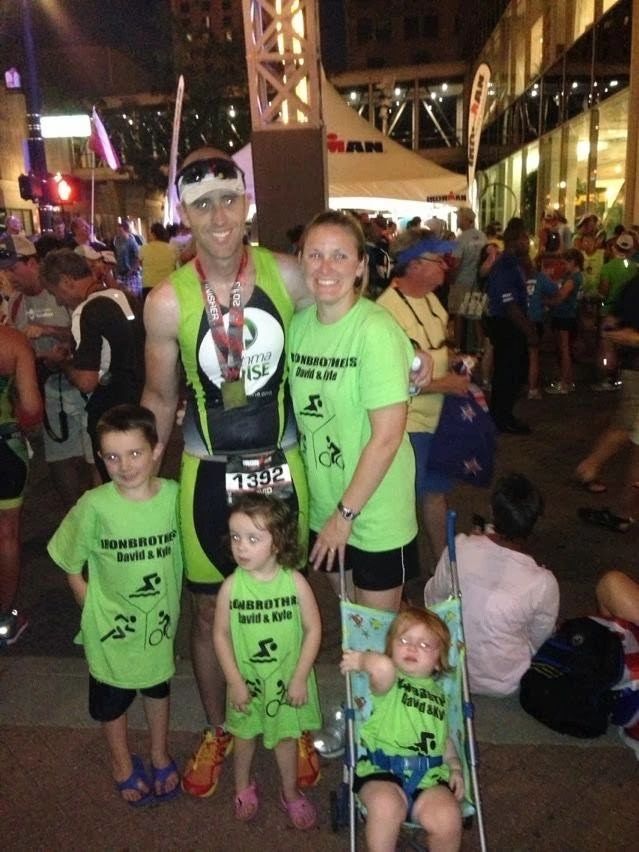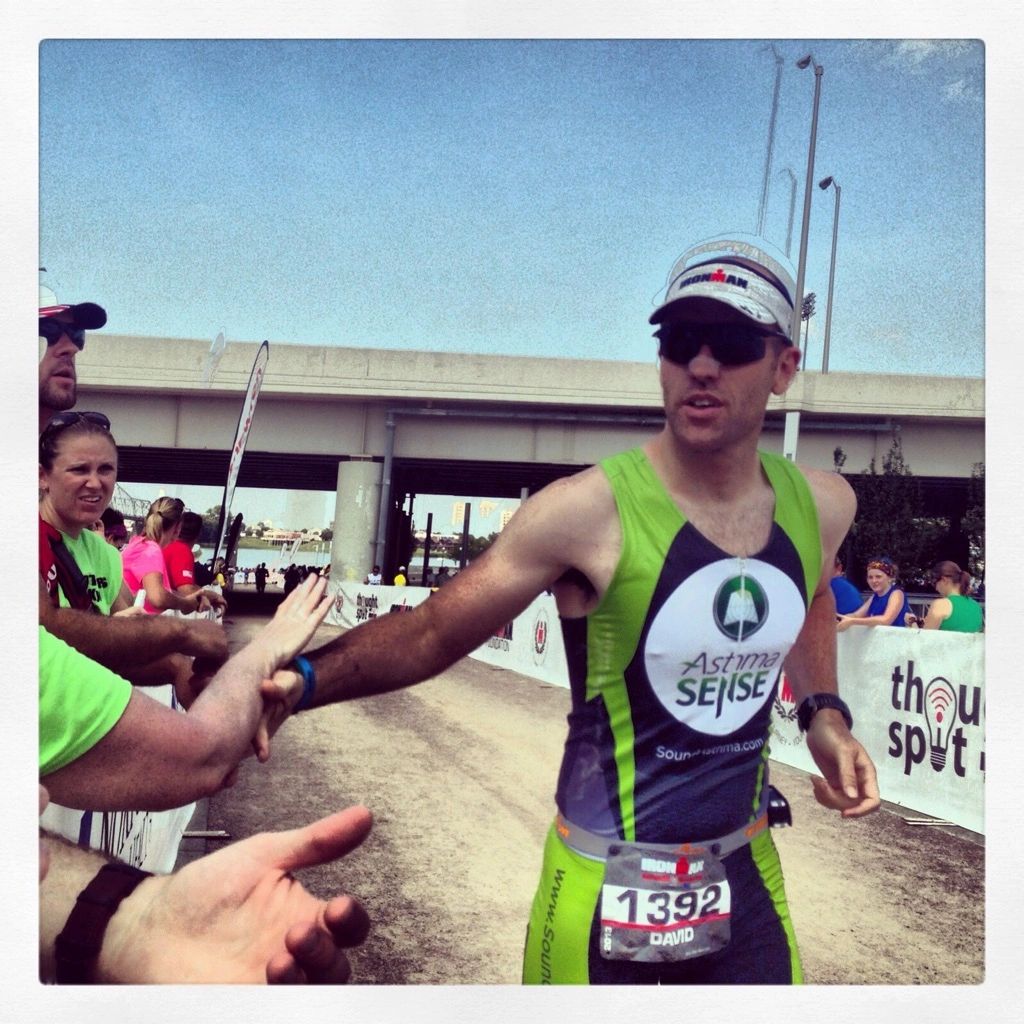
I had a phase in my life where competing in triathlons and running races was something I spent a considerable about of time, money, energy and focus on. The sense of accomplishment the challenge and growth from them was something that spilled over into the rest of my life as well. I’ve completed 2 full Ironmans, both in Louisville in 2012 and 2013. An Ironman triathlon consists of a 2.4 mile swim followed by 112 mile bike ride and they are capped off with a 26.2 mile run. They give you about 17 hours to complete the event. As challenging as that sounds, the year long training routine leading up to it is actually where all the magic happens. The early morning wake ups for swims or runs in the dark. The late evening bike rides or runs on the treadmill. The 2 a days of doing both of those things. All while trying to have a career, be a husband and a dad. Todays blog is my story of the 2013 Ironman, it didn’t go down like I had hoped and as disappointing as that day was, I’m grateful for the experience.
WAKE UP
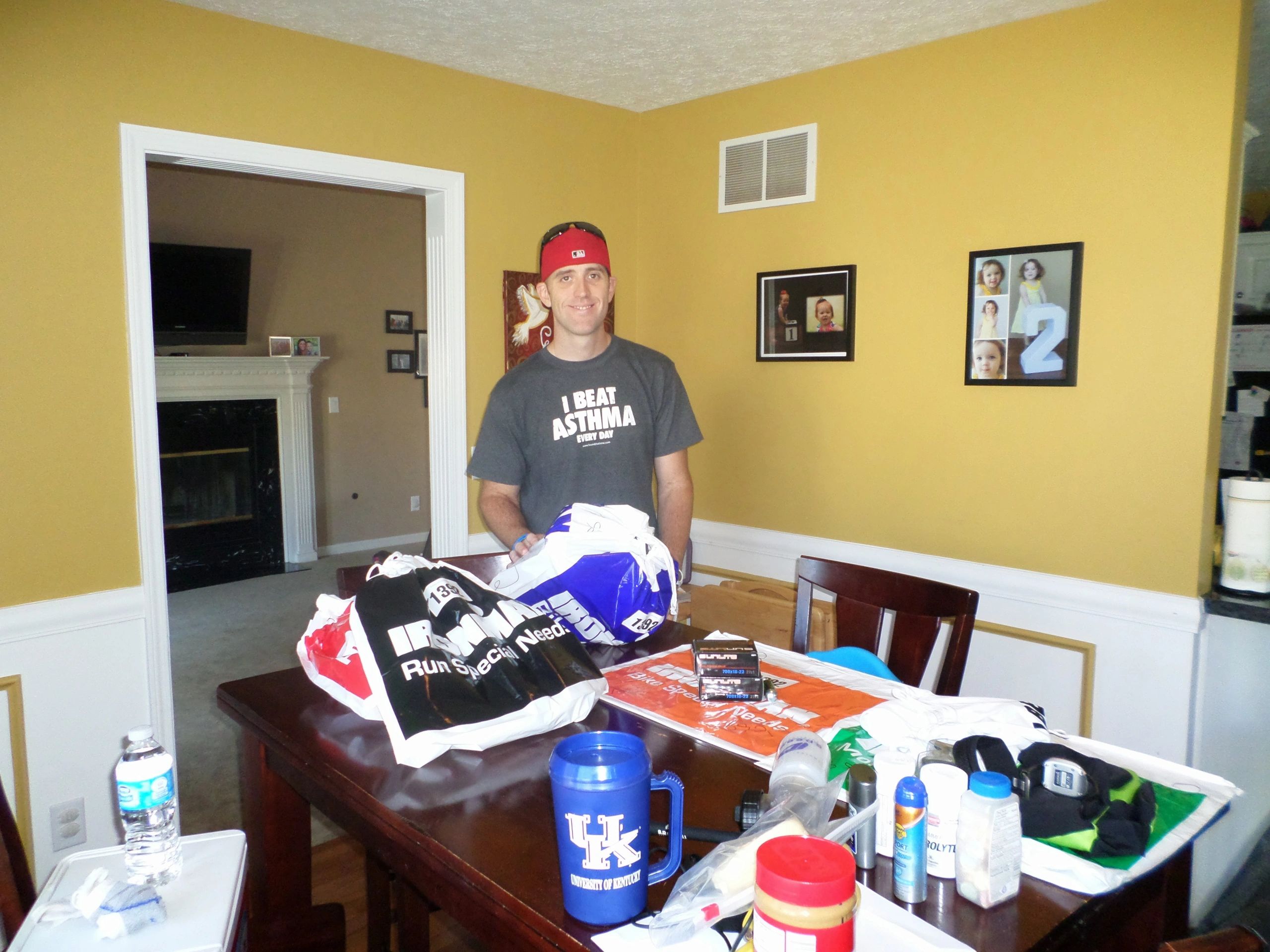
As with most race days it gets going EARLY. Double checking all your gear, nutrition just making sure you got all your stuff together for a long day. You also have to get your morning food (fuel) dialed in so you know what works for your stomach and can sustain for a while. Then you make your way down to the first transition zone (which happens to also be the 2nd for this race) to set up everything you need for when you get out of the swim. This includes getting your bike shoes set up, helmet, glasses, bottles, nutrition for the bike, extra tubes and everything possible to make sure you get through that 112 mile ride. You also get your run stuff set up so that you can be as quick and efficient as possible when you get off the bike to head out on the run. Once you get all of that set up and ready to go, you make your way down to the swim start and wait for the start.
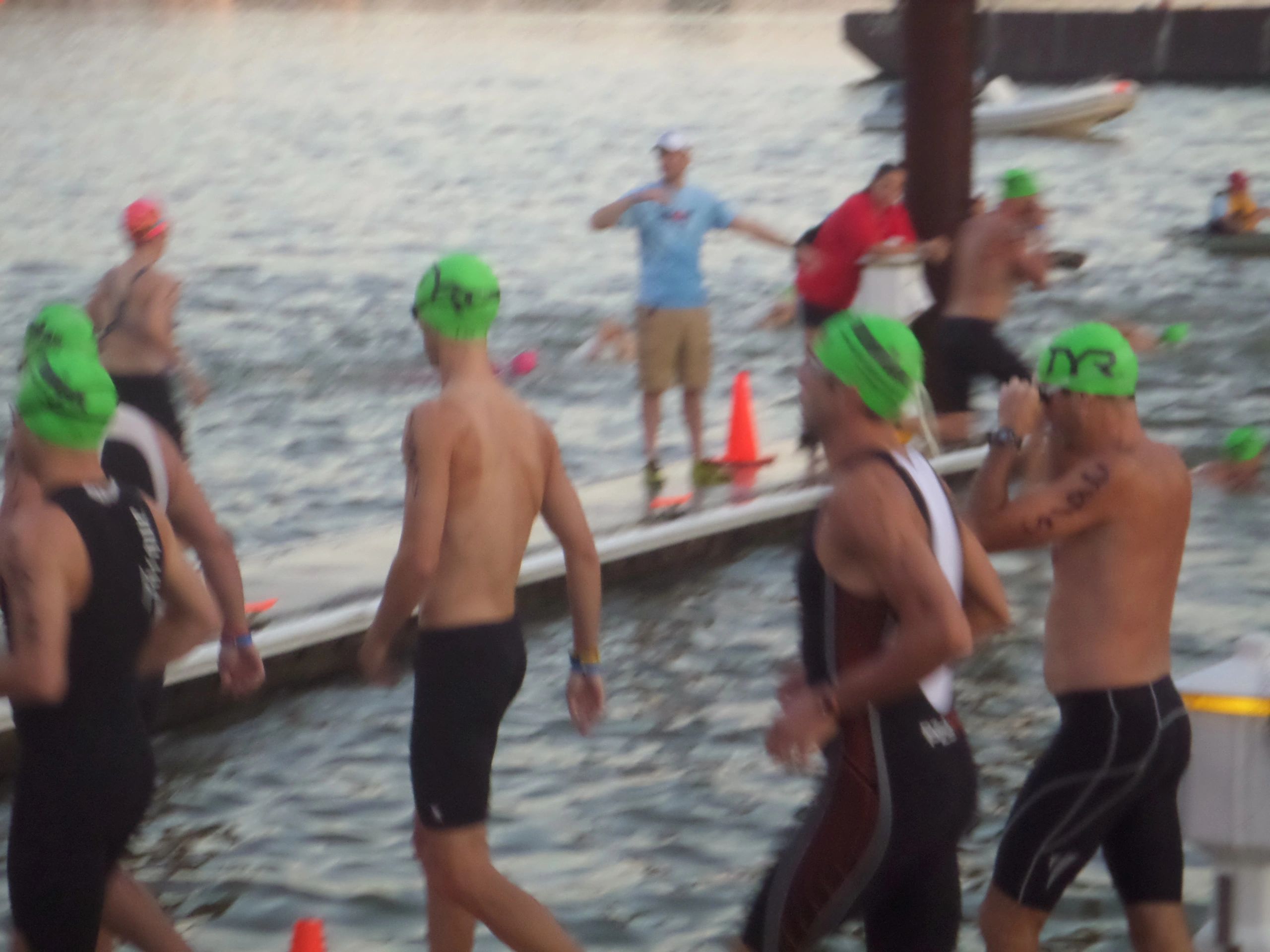
In Louisville, the swim start is single file and a decent little walk from the transition area. This is honestly one of my favorite parts of the day. My wife made that walk with me both years, other family comes down to wish you luck, you see friends, training partners and other competitors. The nerves are legit knowing you put in all that work for this day. The hay is in the barn as my buddy Kevin used to say and it’s time to party. But holy moly I could feel it in my gut. That time from getting in line to when the start officially gets going feels like forever. Then once the gun goes off, you take the slow sludge toward the dock for your turn to jump in and get after it. For some reason, both years, I really had to pee. I’ve learned that it’s darn near impossible to pee while swimming, which seems weird but is very true. So I had to take care of that at the last minute which isn’t super cool.
SWIM START
Now you are on the dock, staring at the water and all the nerves are gone. It’s go time and there is no going back. This race was going to be a badass race. My training leading up to this day, all my prep races were all FAST for me. I was setting PRs, super lean, felt fast and I was pumped to knock a ton of time off my prior year. Confidence was very strong until about 500 years into the swim. I started having cramps in my feet almost immediately. It was brutal as I couldn’t point my toes or kick with my feet at all. The only way to fight it off was to pull my toes toward my knees. Which was like putting on the breaks in the water. Those cramps started creeping into my calves before I was even 25% into the swim and I started to panic. There just happens to be a shallow part of the Ohio River right about at that spot, so I stood up thinking I could stretch them out. Wow was that a bad idea. When I stood up both legs, complete cramps from top to bottom. A safety guy on a canoe happen to see what was going on and said he was going to pull me out. The only thing I could think was no way in HELL are you pulling me out and I took off swimming.
The cramps never went away, I dealt with them for about an hour swimming 2.4 miles in the Ohio freaking river. I kept a constant eye on where the safety team members were, just in case I needed to scream for help. I would rotate to my back and float at times when it got really bad. I one point I got so lost in the situation I was in the middle of the river and WAY away from the shore or the nearest competitor. I had some real talk with God that day. I made lots of promises, shed some tears. Thought about my family if I was to drown and how selfish it was I was out here doing this, spent all that time training and here I am thinking about my wife being husbandless and kids being fatherless. Holy moly that was some emotional stuff I went through that day. I also battled with what happens if I have to quit and all these people that were coming down to support me. All the folks that had supported me the entire way. All I kept saying is that I am not a quitter, not today, I’m going to GRIT this thing out.
Some how I made it to the swim finish, climbing out of the water I felt like I could barely walk. My legs felt like I had done a million squats and all I thought about was how am I going to finish this thing. Then my eyes caught the clock and somehow I was 9 minutes faster than last years time. I knew it was because of the current, but I didn’t care and all of a sudden my legs felt fine. I started jogging to the bike and it was like a fresh start. I couldn’t believe it and with a new found energy I was ready to hit the bike!
To the BIKE
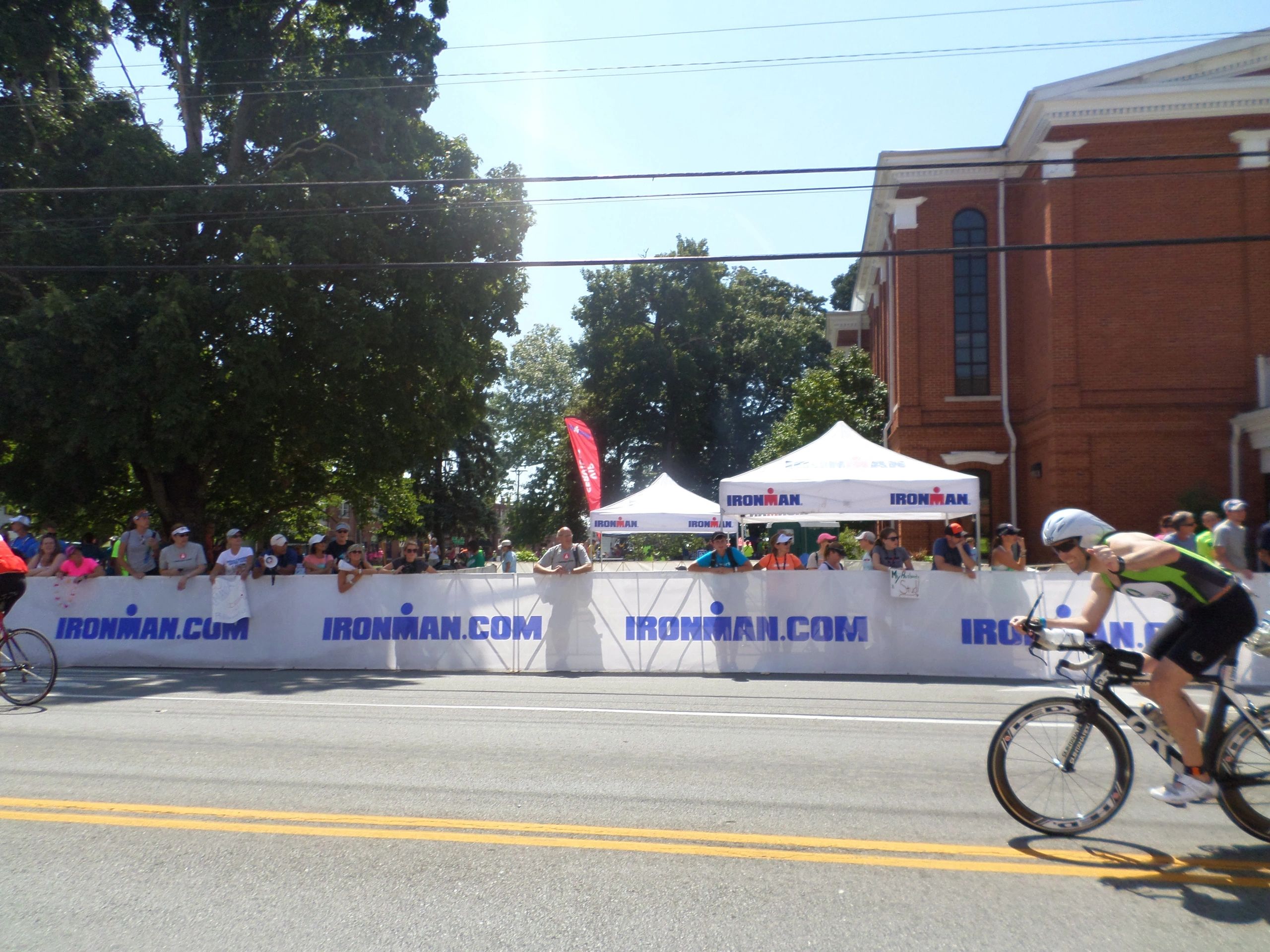
Making a good transition I was heading out on the bike and was going WAY to fast. I had a plan for a pace out of the gate, it’s super flat to start in Louisville and it’s easy to burn yourself up early. I was purposely making myself go slower than I wanted but was flying and felt like I wasn’t even trying. It was a crazy feeling. Next thing I know I’m at the out and back section of the course which has a really steep valley on it. So you fly down at first, climb up then turn around and do it again. On my way climbing out the valley a guy coming the opposite way hit the pavement hard. Maybe the worst crash I’d seen in a race. His helmet was busted, there was blood on the ground and an ambulance was making it’s way through the race crowd to get to him. Many of the same emotions from the swim started flooding back in. I was questioning everything that day, why am I doing this, how could I put my family thought this, ugh it was tough. But I got through that and kept pushing.
Still feeling pretty good I’m on the loop in Oldham County at this point. There is an up coming aid station and I need to refill my water and grab some food. Another thing about Ironman races is that you really don’t ever want to stop or slow down all that much in reality. For me, stopping makes it really hard to get going again. So my goal is NOT to get off that bike the entire time. So as you roll into an aid station you slow down, get over to the right and hold your hand out. The amazing volunteers and will hand you what you need as you go past. It’s pretty awesome really how easy it is and how hard they work to help the athletes. I’d done this dozens of times during my races and never had a problem. On this particular day, someone in front of me decides to take a hard left turn. This results in him slamming into my front wheel while I only have 1 hand on the bars. This sends me FLYING over the handle bars, landing square on my should with all of my gear sent flying through the air.
I land hard, slide across the asphalt and immediately think, what in the hell just happened. My next immediate thought is holy crap I’m on the ground, my bike looks twisted up and my stuff is all over the place. I’ve got one of those volunteers trying to help me up, get my stuff and wanting me to come to the side so they can check me out for injuries. He looked terrified in his eyes, was looking at my shoulder and trying to hold me. As much as I appreciated the concern and all the help all I could think was holy crap I have to get going. He tried to convince me to stop, check my bike, check my body but I was like nope, gotta go. As I’m getting going again I’m checking over my bike for loose parts, bent parts, broken parts and for the most part everything seemed fine so I was back after it. It didn’t take long for my shoulder to start hurting and the road rash to start burning. It made it hard to stay in the proper aero position and get comfortable again and I still had a LONG way to go. The emotions started flooding back in, my back really started to hurt and I knew it was going to be a REALLY long rest of the race.
Part of the Ironman bike course goes through a town called Lagrange. In the middle of town is a place a lot of families come to cheer you on. Usually its a major lift in energy and emotion to see folks out there cheering for you, spending their time to do all they can to show you love. This year, on this lap it almost broke me. I saw my family, friends and people cheering, with matching t-shirts and signs and I immediately started crying, I wanted so bad to stop the bike and get off to hug someone. It had been an emotionally and physically challenging day already and I still had a really long way to go. But like the swim, I kept pushing and after what felt like an eternity I made it to the bike finish. Somehow, again I was still ahead of last years time and I actually extended that advantage so I was ready to get after the run.
Time to Run
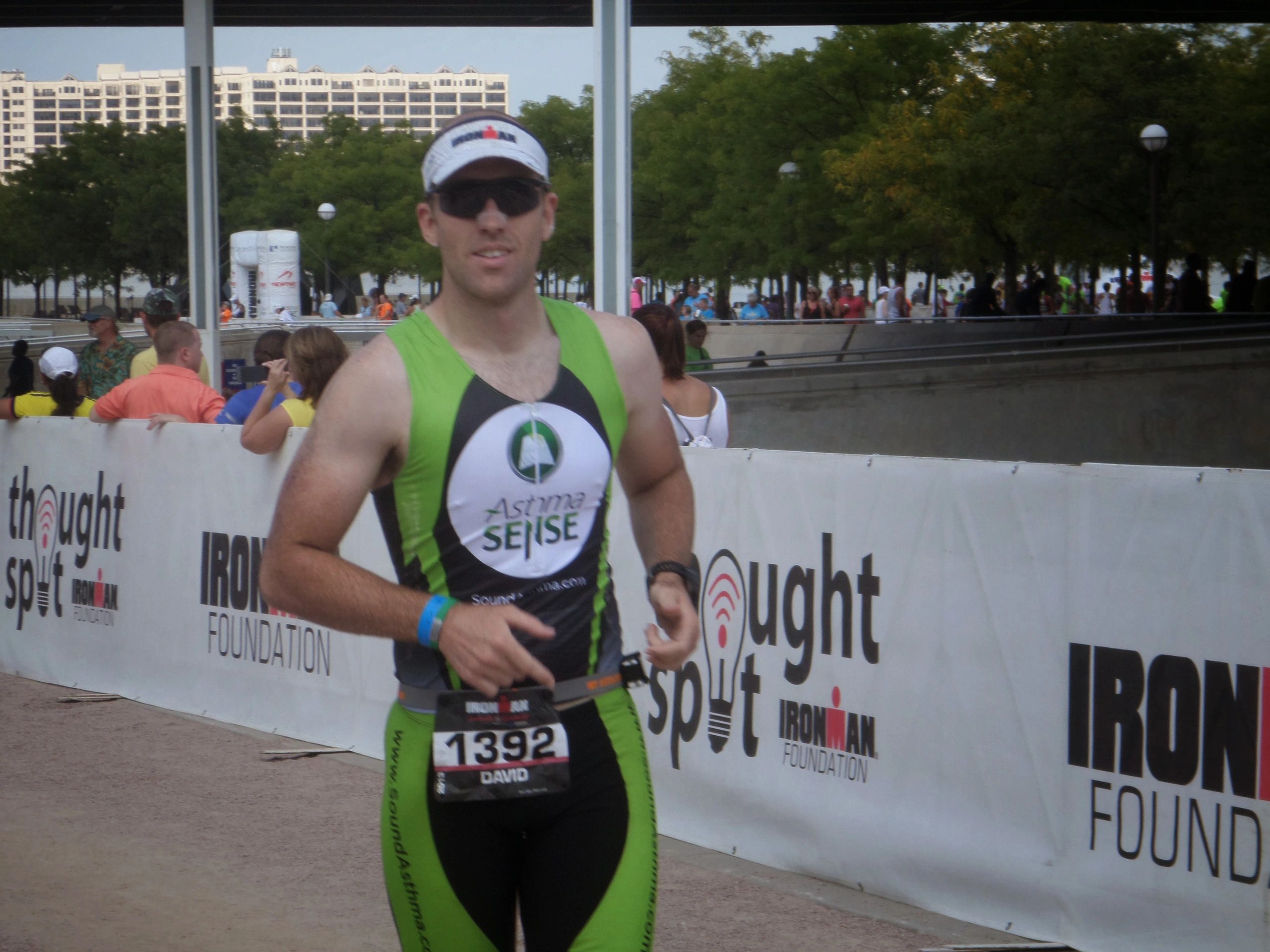
Heading out on the run it was nice again to see my family, who still didn’t know about all the challenges I’ve had. I didn’t say anything and tried to hide the road rash. I knew people would worry and I didn’t want that, the day would be over soon enough and I could tell the whole story then. Right off the bat I felt great. Legs felt good and I was on a good pace. I was at about mile 5 and I hadn’t taken any walk breaks and thought it was probably time to walk through the next aid station to make sure I got in some gel and fluids. So that was my plan, I walked through the next aid station being very purposeful to get the fuel down. I went to start running again and I seriously couldn’t do it. My hips SHUT DOWN to the point it felt like the joints were going to freeze up. It was the craziest thing I’ve ever experienced running. I tried to run through it, job, walk/jog, nothing I could do was helping. It was depressing to say the least. I did my best to move as fast as possible but there just wasn’t much there. Luckily I met some other guy who was in a similar situation. He was a preacher from Georgia and had a thick southern accent and we paired up and pretty much walked the last 20 miles together. He really kept my mind off the pain and disappointment of the day. I’m pretty sure God sent him as I’m not sure how I would have managed those last 20 miles to be honest. We separated near the finish line and I did see him again, wish I would have gotten his name.
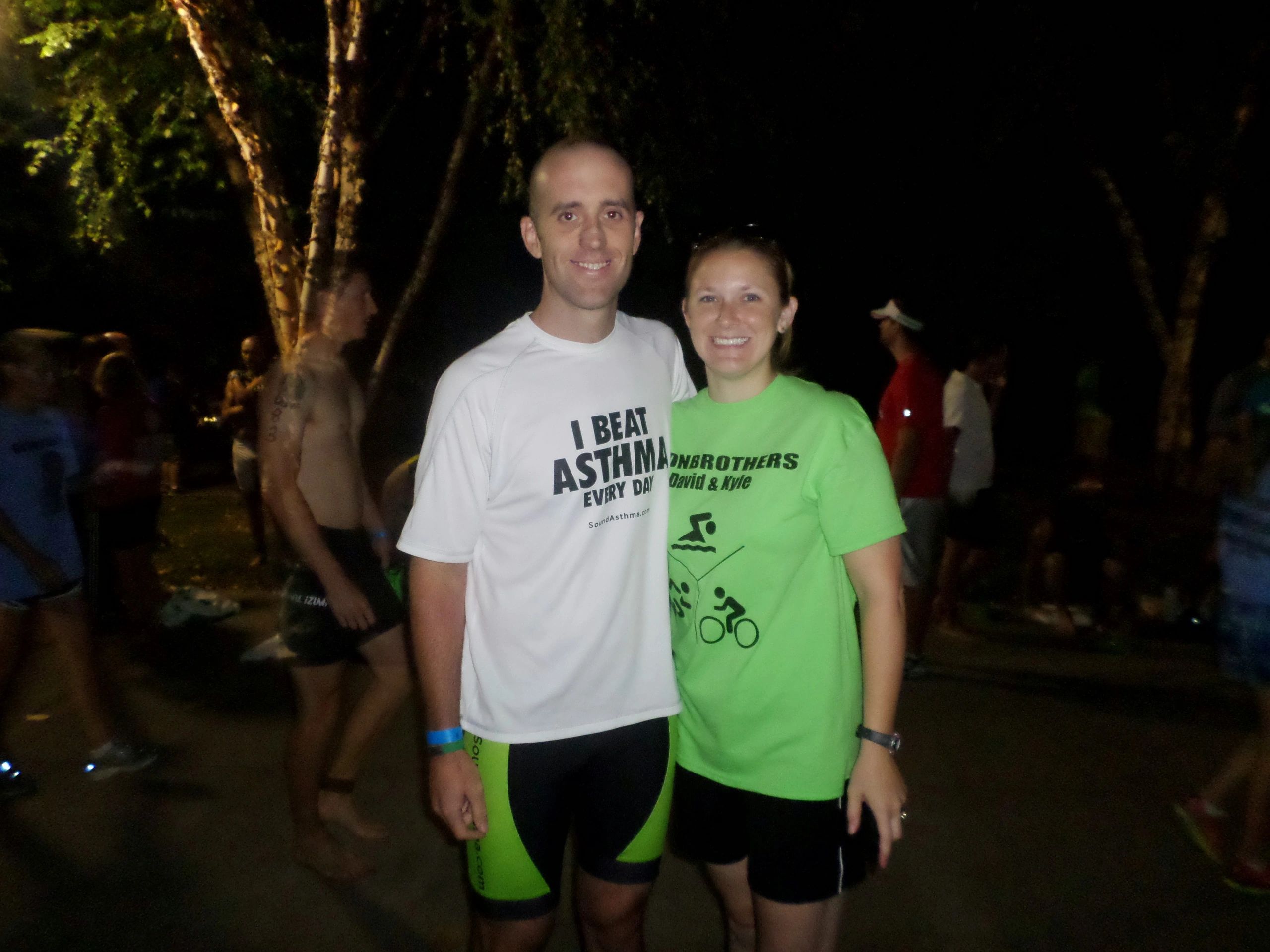
At some point during he last 10 miles a friend of mine came out to see me. I told him about my day and the wreck and other craziness. Little did I know he shared that with the rest of my support crew so by the time I made it to the finish I think they all were in some mix of worried to death, thinking I was totally nuts or mad at me. haha. But coming down that finish line all I could think about was how I failed, didn’t hit my goal and was disappointed and embarrassed in my performance. My wife was the first person I remember seeing as I cross the finish line. Really the only thing I remember about that finish was falling into her arms and sobbing like a baby. She is my rock and that is a moment I will never forget. All she and my 3 kids felt were pride in me and thankfulness I was ok. I am a blessed man…
Lessons Learned
Looking back on that day is emotional. It took me a while to get over the disappointment but after a while and after talking to some friends that disappointment started to change. I started looking at this day as a day that made me stronger. A day I could always look back on and be proud of. I pushed through things that many will never experience or push through. The toughness that I found that day sits in me today and I recall it regularly as a source of strength. Remembering that I can do absolutely anything I put my mind to. Challenges can either stop you or make you strong, I chose to use this one to make me stronger. GRIT is something that can be learned, experience, nurtured and grown. This was a GRIT day for me and I’m better for it.
I hope you take from this memory the same thing I hope my kids take from it. NEVER EVER GIVE UP! You are worth it and you can accomplish amazing things if you just want it bad enough. Life truly does happen on the other side of your comfort zone, I know, I’ve been there.
I’m targeting doing another Ironman when I’m 50. I have no idea why, but it’s a target on my list. Hopefully I’ll see you out there. And I won’t have crazy cramps or a wreck to tell you about.