Category: success

  • 7 Strategies for Effective Decision-Making as a Leader

    The ability to make decisions effectively is an important skill for leaders and leadership teams. The choices you make have a lasting impact on your teams, organization and success overall. This is something many if not everyone deals with at times and for many reason. It’s HARD!!! In this post, I’ll share 7 strategies that can help you be more effective as you navigate challenges situations.

    1. Gather Relevant Information:

    To make informed decisions, gather as much relevant information as you can. Identify key factors, gather data, seek applicable opinions, and consider multiple perspectives. This comprehensive approach ensures a holistic view of the situation and supports decision-making based on accurate and reliable information. But be careful here, it’s easy to get analysis paralysis and get into a constant loop in this phase and never get out. Let’s just say don’t let “perfect” get in the way of “good enough”.

    2. Define Clear Objectives:

    Clearly define the objectives you want to achieve through your decision. Establish the outcome you aim for and the goals that need to be met. Defining clear objectives provides focus during the decision-making process and helps assess potential options against these objectives. This should include a timeline for the decision. Making sure things like this are time boxed, helps to ensure proper focus and stops things from dragging out.

    3. Evaluate Alternatives:

    Consider multiple alternatives or options before making a decision. Encourage creative thinking and brainstorming within your team. Evaluate the pros and cons of each option, considering factors such as feasibility, risks, and potential impact. This evaluation process allows you to make a more balanced and informed decision.

    4. Seek Input and Collaboration:

    Involve key stakeholders and seek input from team members who may have valuable insights or expertise where it’s applicable. Encourage open dialogue and create a collaborative environment where diverse perspectives are heard and considered. This collaborative approach increases the chances of making well-rounded decisions.

    5. Assess Risks and Mitigation Strategies:

    Identify potential risks associated with each option and develop mitigation strategies to minimize their impact. Consider the short-term and long-term consequences of your decision and evaluate the risk-reward trade-offs. This analysis allows you to make decisions with a clear understanding of the associated risks.

    6. Use Decision-Making Models or Frameworks:

    Utilize decision-making models or frameworks that provide a systematic approach. Examples include SWOT analysis, cost-benefit analysis, or decision matrix approach. These models help structure your thought process, consider relevant factors, and make more objective choices.

    7. Trust Your Intuition:

    Balance data and analysis with your intuition. Trust your gut instincts, especially when faced with time-sensitive decisions or limited information. However, always strive to balance intuition with rational thinking and evidence-based decision-making.

    In summary, effective decision-making is a crucial skill for leaders and takes time to get really good at it. For new leaders, embrace a learning and growth mindset, know that you will be wrong and learn from those and don‘t be afraid of them. By gathering relevant information, defining clear objectives, evaluating alternatives, seeking input and collaboration, assessing risks, using decision-making models, and trusting your intuition, you can make well-informed decisions that drive success. Continuously honing these strategies will enhance your leadership abilities and lead to better outcomes for your team and organization.

  • Building Trust and Credibility in Leadership

    Trust and credibility are critical pieces of effective leadership. When leaders are trusted, they can inspire their teams, foster collaboration, and achieve amazing results. In this post, we will review 7 components of building trust and credibility as a leader and discuss strategies to grow these essential qualities within your team.

    1. Leading by Example:

    One of the most powerful ways to build trust and credibility is by leading by example. Consistently demonstrating integrity, honesty, and ethical behavior sets the standard for your team members. When they witness your commitment to your values and observe your actions aligning with your words, trust naturally follows.

    2. Effective Communication:

    Clear, open, and transparent communication is essential for establishing trust. Share information, goals, and expectations with your team members, and actively listen to their concerns and feedback. When your team feels heard and understood, trust in your leadership grows, fostering a culture of open communication and collaboration.

    3. Reliability and Consistency:

    Being reliable and consistent in your actions and decisions is crucial for building trust. Follow through on your commitments, meet deadlines, and be consistent in your approach to leadership. When your team members can rely on you to deliver on your promises, trust is strengthened, and credibility is enhanced.

    4. Accountability:

    Hold yourself accountable for your actions and decisions, and encourage your team members to do the same. When mistakes happen, take responsibility and learn from them. By promoting a culture of accountability, you build trust within your team, as everyone knows that they are equally responsible for their actions and contributions.

    5. Empowerment and Delegation:

    Trust your team members by empowering them to take ownership of their work and delegating responsibilities accordingly. When you demonstrate trust in their capabilities, it fosters their confidence and encourages them to excel. This delegation of authority creates a sense of ownership and accountability, further strengthening trust.

    6. Consistent Recognition and Feedback:

    Providing regular feedback and recognizing the achievements of your team members is vital for building trust. Celebrate their successes openly, and offer constructive feedback to support their growth. When team members feel valued and see that their contributions are acknowledged, trust in your leadership deepens.

    7. Building Personal Relationships:

    Invest time in building personal relationships with your team members. Get to know them as individuals, understand their aspirations, and show genuine care and support. By fostering personal connections, you create a sense of camaraderie and mutual respect, strengthening trust and collaboration.

    To wrap up, building trust and credibility is a continuous journey for leaders. By leading by example, communicating effectively, being reliable and consistent, fostering accountability, empowering your team, providing feedback and recognition and building personal relationships, you can cultivate a culture of trust within your organization. Remember, trust is earned over time, and nurturing it is essential for creating a high-performing and engaged team that is ready to achieve extraordinary results.

  • Mastering Effective Communication Skills for Leaders

    Effective communication lies at the heart of successful leadership. It is the cornerstone of building relationships, fostering collaboration, and driving organizational success. In this blog post, we will explore the essential communication skills that leaders should master to enhance their effectiveness and positively impact their teams.

    1. Active Listening:

    Active listening is a crucial skill for leaders. It involves fully focusing on and understanding the speaker’s message, both verbal and non-verbal. By actively listening, leaders demonstrate respect, empathy, and a genuine interest in their team members’ perspectives. This skill promotes open dialogue, encourages trust, and fosters stronger relationships within the organization.

    2. Clarity and Conciseness:

    Leaders need to communicate with clarity and conciseness to ensure their message is understood by everyone. Avoid jargon, complex language, or unnecessary details that can confuse or overwhelm your audience. Use clear and concise language to articulate your ideas, expectations, and goals, enabling your team to comprehend and act upon them effectively.

    3. Non-Verbal Communication:

    Non-verbal cues such as facial expressions, body language, and tone of voice play a significant role in effective communication. Leaders should be mindful of their non-verbal signals and ensure they align with their intended message. By maintaining eye contact, using appropriate gestures, and projecting a confident yet approachable demeanor, leaders can enhance their communication effectiveness.

    4. Adaptability and Flexibility:

    Leaders must adapt their communication style to different situations and individuals. Recognize that each team member may have unique communication preferences and adjust your approach accordingly. Some may prefer face-to-face meetings, while others may prefer written communication. Being adaptable and flexible in your communication style helps build rapport and ensures that your message resonates with diverse audiences.

    5. Empathy and Emotional Intelligence:

    Empathy is a critical component of effective communication. Leaders who demonstrate empathy understand and acknowledge the emotions of their team members. By putting yourself in their shoes and responding with sensitivity and understanding, you create an environment that encourages open dialogue and builds trust. Emotional intelligence allows you to gauge and respond appropriately to the emotions and needs of others, fostering stronger connections and collaboration.

    6. Constructive Feedback and Recognition:

    Providing constructive feedback and recognizing achievements are essential aspects of leadership communication. When delivering feedback, be specific, objective, and focus on behavior rather than personal traits. Likewise, recognizing and acknowledging the contributions of your team members boosts morale and motivation. By mastering the art of giving feedback and recognition, leaders inspire continuous growth and improvement within their teams.

    7. Transparency and Authenticity:

    Leaders who communicate with transparency and authenticity create an atmosphere of trust and credibility. Share information openly, involve your team in decision-making when appropriate, and be honest about challenges and setbacks. Authenticity in communication means being true to yourself and your values, which builds rapport and encourages open communication within your team.

    In summary, mastering effective communication skills is an essential component of successful leadership. By actively listening, communicating with clarity and conciseness, utilizing non-verbal cues effectively, adapting to different communication styles, demonstrating empathy, providing constructive feedback, and promoting transparency, leaders can establish strong connections, inspire collaboration, and drive organizational success. Invest in honing your communication skills, and watch as your leadership effectiveness soars.

  • The Importance of Self-Awareness as a Leader

    Self-awareness is a fundamental trait that distinguishes exceptional leaders from the rest. It involves having a deep understanding of your own strengths, weaknesses, values, emotions, and impact on others. In this blog post, we will explore why self-awareness is crucial for effective leadership and how it can positively influence your team and organizational success.

    1. The Foundation of Authentic Leadership:

    Self-awareness forms the foundation of authentic leadership. When you have a clear understanding of your own values, beliefs, and purpose, you can lead with integrity and align your actions with your core principles. Authentic leaders inspire trust, foster open communication, and create a culture of transparency within their organizations.

    2. Enhancing Emotional Intelligence:

    Self-awareness is a key component of emotional intelligence, which is essential for effective leadership. By being aware of your emotions and how they influence your thoughts and behaviors, you can regulate and channel them in productive ways. This enables you to navigate challenging situations, empathize with others, and make thoughtful decisions.

    3. Identifying Strengths and Weaknesses:

    Self-awareness allows leaders to identify their strengths and weaknesses. By understanding your strengths, you can leverage them to drive excellence and delegate tasks that align with your team members’ strengths. Recognizing your weaknesses helps you seek support, develop necessary skills, and surround yourself with complementary talents, fostering a well-rounded leadership approach.

    4. Building Stronger Relationships:

    Leaders with high self-awareness are more attuned to the impact they have on others. They actively seek feedback and are open to constructive criticism. This humility and willingness to learn fosters stronger relationships with team members, encourages open communication, and creates a supportive work environment.

    5. Driving Personal and Professional Growth:

    Self-awareness fuels personal and professional growth. By reflecting on your experiences, seeking self-improvement opportunities, and embracing lifelong learning, you continually evolve as a leader. This growth mindset inspires and motivates your team members to develop their own skills and reach their full potential.

    6. Cultivating a Culture of Feedback:

    Leaders who prioritize self-awareness create a culture that values feedback. By openly acknowledging your own areas for improvement, you encourage others to do the same. This fosters a safe environment where constructive feedback is seen as an opportunity for growth rather than criticism, leading to continuous improvement and innovation.

    7. Inspiring and Engaging Others:

    Self-awareness enables leaders to connect with their team members on a deeper level. By understanding your own values, motivations, and purpose, you can inspire and engage others around a shared vision. Your authenticity and self-reflection create a sense of trust and authenticity that motivates your team to go above and beyond.

    In summary, Self-awareness is the cornerstone of effective leadership. By gaining a deep understanding of yourself, embracing your strengths, addressing your weaknesses, and fostering personal growth, you can become an authentic and influential leader. Investing in self-awareness not only benefits you but also creates a positive impact on your team, organizational culture, and ultimately, your overall success as a leader.

  • Your Circle

    I’ve heard it said that you are the average of the people you surround yourself with. Similarly it’s said that if find yourself being the smartest person in the room, you should find another room. Both of these sayings in my opinion get at the importance of a growth mindset and getting out of your comfort zone.

    Whether that be working to develop your own personal board of directors. Made up of people that have skill sets, experiences and knowledge you don‘t have. These folks can serve as advisors in many different areas of life. Career, family, money, future, faith and anything else you can imagine. I’ve been lucky to have built relationships with a lot of successful people that often challenge me to think different and many times to think BIGGER. Sometimes you just need that push.

    The smartest person in the room translates to your comfort zone. It’s easy when you are the expert, have all the answers and are in situations you don’t need help or advice. But if you find yourself in that situation, there is a great chance you aren’t learning, growing or really in a position to level up. Putting yourself in the room with folks that are smarter than you, more successful than you and that regularly push for bigger/better/faster WILL push you to up your game and achieve more.

    You owe it to yourself to find ways to do these things. It’s important to remember, the things you do today WILL define who you will be in the future and often how successful you will be in achieving your own goals. Whatever those may be!

  • Today’s CFO role is different…

    I used to have a very different perspective of what it meant to be a CFO while I was in college and even very early in my career. I mostly saw it as an accounting role that closed and books and helped the company see out of the review mirror. Being someone that really like to be involved in strategy, preparing for the future and using financial data to tell a story, I never thought it would be a role for me. Even when I finished my undergrad with a major in finance and started on my MBA, there was an opportunity to double up on the masters program for a more finance focused program geared toward future CFOs and I simply wasn’t interested. I’m very happy I kept on the track though because I sure ended up being very wrong!

    Pretty much my entire career has been spent in some type of financial role. Even my internships were financial and investing focused at Invesco and Aegon Institutional while also working in a local bank through college. I got my first salaried job before I even graduated at a local hedge fund as a trader on the European desk and then moved to the sales side trying my hand in financial planning at AG Edwards and Sons. I later moved on to be an analyst in the treasury and investment department at Humana before being asked to take on a consultant role working to revamp Humana’s cash posting operation. From there I had an opportunity to be a branch manager at National City Bank. I ended up back at Humana after a couple years in the Medicare Finance organization before being asked to help seed a new finance team tasked with standing up a new region within Humana. After getting that region going and growing it to 2 states, I was promoted to the divisional finance team where I worked to develop new reporting and analytics tools to help providers take on value based care. I was then promoted to regional CFO where I got to get really involved in the operations of a region. Everything from BIDs, budgets, value based relationship management, MRA, Stars and everything else that makes a Medicare Advantage plan perform.

    What happened next was really a culmination of all of that experience which was a chance to be CFO and COO for a Medicare start up inside of Humana. The role and opportunity really helped me see what it was like to build something from the ground up. And to see how a stategic thinking CFO that was focused on performance, culture and leadership can really play such a critical role in the success of an organization. After serving in that role for 3.5 years I took a chance at a CFO role at a real start up, Honest Medical Group where I am today.

    I’ve learned so much through my 20+ year career about business, leadership, finance and so much more. But what I’ve really come to appreciate about being a CFO is that it’s so much more than I ever thought that it was. Being strategic, knowing the operations, being a key leader of the executive team and getting to work alongside some amazingly smart people is really something that so very few get the chance to do. Being a CFO is NOT about looking in the rear view mirror, it’s not about just closing the books and handling accounting type work. It’s so much more than that. So if you have interest in becoming a CFO, learn the operations, learn what makes the company tick, learn about strategy and how all of these things impact the financial performance of a business. You will be better for it and have even better opportunities to reach your goals and help your business reach it’s goals.

    If you’d like to learn more about my experience or just have questions about your own path, reach out, I’d love to share, coach, consult or help in any way I can.

    Dave

  • Taking Breaks

    I recently took a week away from the office to take my family on a spring break trip. I’m lucky to have a leader and a team that supports this. One thing I’ve learned through my 20+ year career is that there is NEVER a “good” time to take vacations and to truly unplug and I’m one of the most guilty people about not taking PTO. There is always more work to be done then there is time to do it. Those expectations only intensify the higher up you climb. The next fire drill, the next important meeting, the next presentation, the next budget, the nexts just continue. Because of this, it’s more important than ever, as MJ would say to “Just Do it”. These are my top 5 reasons it’s important to take time, especially if you have a family.

    You’ve only got 1 family and 1 lifetime

    Your family needs you a lot more than your job needs you. Marriages take effort, raising kids takes effort and having healthy relationships take effort. This effort can not be the leftovers because all your effort was all spent at work. This is time and investment that will have a greater ROI than anything you do professionally. I’ve seen both sides, I struggle with this in a big way. I often feel guilty about my family getting the leftovers. I’m sharing this as a way to challenge myself but also encourage others.

    Time is the only resource we can’t make more of

    One of my favorite quotes is that it’s not the years in your life that matter, it’s the life in your years that counts. I have to remind myself of this constantly. Saying that I’ll do that tomorrow, or we’ll take that trip next year or in 5 years. Whatever your time box is and the reasons for it, tomorrow is not promised. I do not want to look back at my life with a lot of I wish I would haves. I’d much rather look back on my life with a lot of, wow, I can’t believe I did that’s.

    The work will be there when you get back (most of the time)

    Most important work related activities don’t come and go in a week. Some do, but that is where the value of a team and the benefit of leadership can really be fruitful. Being a good leader means engaging and involving your team. It means helping those on your team develop the tools so that they can step up and fill in if it’s needed. It means having the faith and the trust in your team, your peers and your leaders that most things can be covered while your out.

    Breaks are good for your mental health

    Taking a break to reset and recharge have proven to increase performance. Stepping back for a bit can give you new perspective. It allows you to see how things go while your away. It allows you to see folks true colors. It also lets you clear your mind, find fresh ideas, get excited about jumping back in and importantly a feeling of appreciation.

    Be the leader that encourages and celebrates these breaks

    Todays workforce is extremely competitive. Top talent can find jobs faster and easier than ever before. People want more than anything to feel appreciated and supported. Be a leader, be an organization, be a culture that celebrates peoples value and life outside of the the business. When people feel supported and valued, not only will they stay longer but they will work harder and give more. Be the leader that not only supports but models these traits, your business will benefit from it. I guarantee it.

  • New Adventure

    Today (2/24/22) is officially my last day at Humana. I will be forever grateful for the relationships, friendships, mentorships and more that I’ve experienced during my 17 years. In addition to the people, I’ve had incredible opportunities to learn and grow in a number of roles across the organization. I’ve been blessed with great leaders and teammates all along this journey and I’m hopeful our paths will cross again.

    I have received so many notes of congratulations, encouragement and gratitude. Knowing that I’ve had an impact on peoples lives as a leader and colleague helping them progress in their own careers and life is really what’s its all about. I love business, I love our customers and the mission but above all of that are the people that make it all worth it.

    With that said, I’m extremely excited to share that I am joining the talented leadership team at Honest Medical Group a Rubicon Founders portfolio company as CFO. I’m grateful for the opportunity to be a part of this team that’s focused on building products and services that focus on improving care and member satisfaction while reducing costs for people with Medicare.

    Here’s to new challenges and new beginnings!

  • The Growth Mindset & Why it Matters

    Almost 4 years ago I had the opportunity to do something new in my career. I got to become the COO/CFO for a start up within the large company I had 14 years working in. I knew this would be a significant change for me, I knew it would be challenging, I knew it wasn’t safe but what I didn’t fully appreciate was the amount of change it would do for me. It was scary, it would take me out of my comfort zone and push me in ways I’ve never been pushed. What I’ve also experienced through his is how important mindset is. Being open to that challenge, excited about it, starting with a beginners mindset and embracing a growth mindset has been a game changer for me. I’m not the same person, leader or employee that I was 4 years ago and I want to share a little about what I mean by that.

    Something I’ve always tried to embrace is “rethinking routine”. Which means I love to ask why we do things. Why we do them at all, why we do them certain ways, is there a better way or a better thing? I tend to get bored easy and I don’t like feeling in a rut, so shaking things up is a natural tendency I have. In business, I’ve found this to be a successful part of my career journey. It’s really easy to for people, teams and organizations to get into a rhythm of process. The challenge with that is that our world changes so rapidly, this can easily mean you find yourself behind. Behind in technology, efficiency and organizational design including talent. Being open to and embracing this fact allows you to see and address things starting with curiosity. If you don’t try to disrupt yourself every single day in business, someone else will. Which is at the heart of a beginners approach and feeds the growth mindset.

    The reason I call this out as mindset is because I believe and studies show that it is in fact a mindset characteristic. Luckily this mindset can be built, grown and nurtured. Individuals can of course take this on themselves but it’s drastically more successful if it’s supported by the organization and its leaders. Meaning that rethinking routine is celebrated and not criticized. This feeds a culture of safety vs. a culture of fear. It takes mature and strong leaders to accept and embrace when their world is challenged. But leaders that can do that and do it successfully, build a culture that is fired up for it. When your team members not only feel welcomed to question things but actually expected to. The level of freedom, empowerment and buy-in explodes.

    I’ve luckily embraced this in just about every role I’ve had. Which has often then led me to the next role. But none more so then when I had the opportunity to start a start up within my company. Myself, my peers and our teams were given the task to 100% focus on the member fist and challenge everything we knew about how things were done today. Some of those things were excellent, absolutely no reason to change, best in class. But in many cases, there was a better way to organize, better technology to use, better processes to implement. All building toward a better way to serve our customers, which was 100% our focus. This opportunity was sparked by our leader, who on my very first day handed me a book and said read this. It was a book called “Start with Why” by Simon Sinek. That gesture, that book, that push from my new boss at the time sparked something in me. I felt a new level of push to not only embrace this mindset, but lead and build a team where this was deeply embedded in our culture. It also kicked off a new burning desire to learn more and since then I’ve ready over 50 books and listened to countless podcasts relating to this topic.

    I’d be remiss to suggest this was easy and not something that has gotten even harder the longer we exist and the bigger we get. But even to this day, almost 4 years later, it still sits at the epicenter of how we act and what we do each day. The mindset allows us to navigate the hard days, the challenges and see them as opportunities to learn and improve. I’m forever grateful for that leader, the push and this opportunity. I’m excited about the future and continuing to build and grow this mindset wherever it may take me.

    I ask you to lean into learning about the growth mindset. There are great books and podcasts on the subject. It’s not only great for business but in your personal life to. As a husband, father, son, friend, mentor, mentee, you name it. If you can embrace being open to other views, opinions, ways of doing things. If you see challenges as opportunities instead of blockers and start with “why” and “curiosity” the growth and happiness you will experience is something I can’t wait for you to tell me about, because it will come.

  • My 2013 Ironman Louisville a Story of GRIT

    I had a phase in my life where competing in triathlons and running races was something I spent a considerable about of time, money, energy and focus on. The sense of accomplishment the challenge and growth from them was something that spilled over into the rest of my life as well. I’ve completed 2 full Ironmans, both in Louisville in 2012 and 2013. An Ironman triathlon consists of a 2.4 mile swim followed by 112 mile bike ride and they are capped off with a 26.2 mile run. They give you about 17 hours to complete the event. As challenging as that sounds, the year long training routine leading up to it is actually where all the magic happens. The early morning wake ups for swims or runs in the dark. The late evening bike rides or runs on the treadmill. The 2 a days of doing both of those things. All while trying to have a career, be a husband and a dad. Todays blog is my story of the 2013 Ironman, it didn’t go down like I had hoped and as disappointing as that day was, I’m grateful for the experience.
    WAKE UP

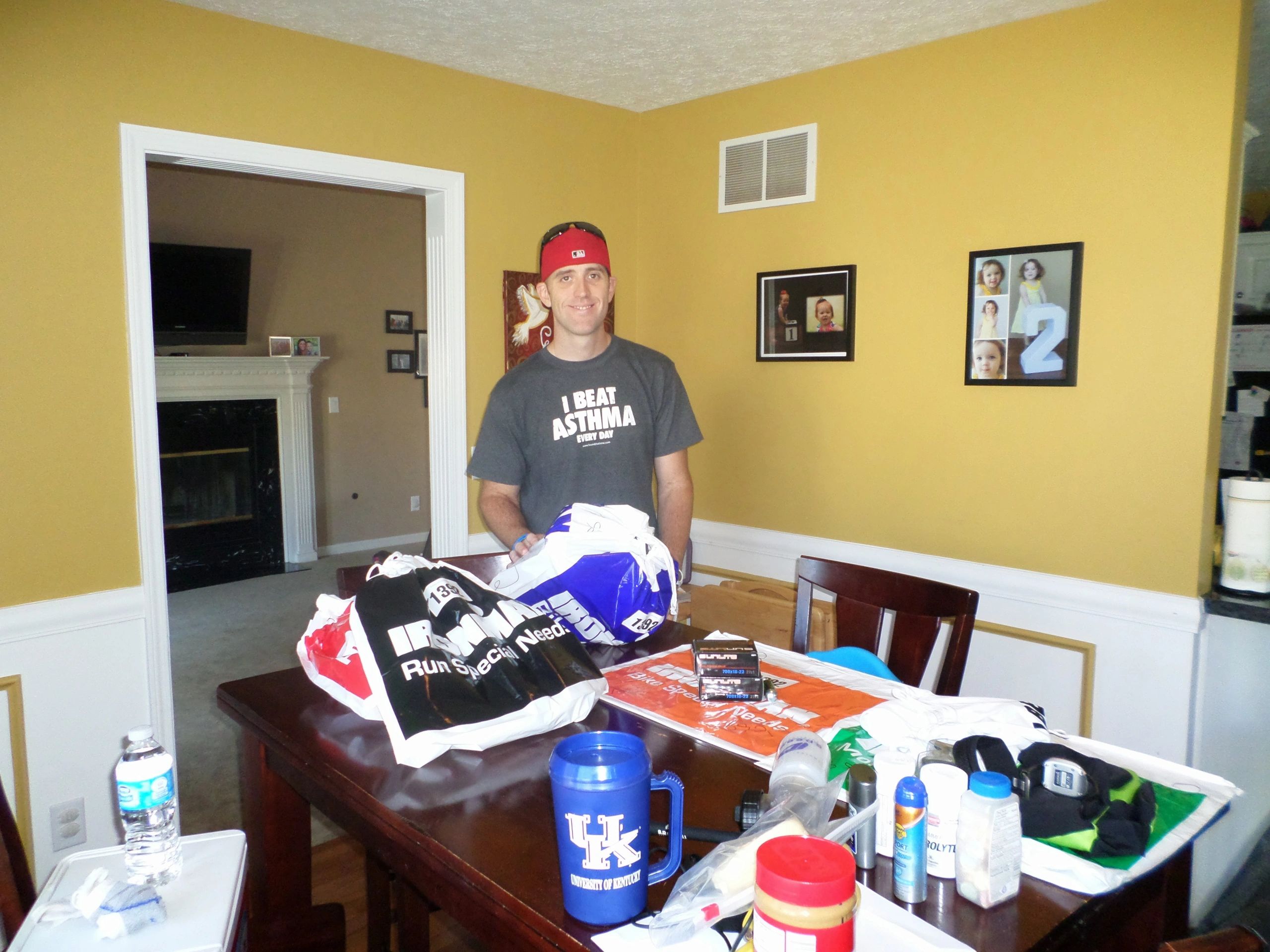
    As with most race days it gets going EARLY. Double checking all your gear, nutrition just making sure you got all your stuff together for a long day. You also have to get your morning food (fuel) dialed in so you know what works for your stomach and can sustain for a while. Then you make your way down to the first transition zone (which happens to also be the 2nd for this race) to set up everything you need for when you get out of the swim. This includes getting your bike shoes set up, helmet, glasses, bottles, nutrition for the bike, extra tubes and everything possible to make sure you get through that 112 mile ride. You also get your run stuff set up so that you can be as quick and efficient as possible when you get off the bike to head out on the run. Once you get all of that set up and ready to go, you make your way down to the swim start and wait for the start.

    In Louisville, the swim start is single file and a decent little walk from the transition area. This is honestly one of my favorite parts of the day. My wife made that walk with me both years, other family comes down to wish you luck, you see friends, training partners and other competitors. The nerves are legit knowing you put in all that work for this day. The hay is in the barn as my buddy Kevin used to say and it’s time to party. But holy moly I could feel it in my gut. That time from getting in line to when the start officially gets going feels like forever. Then once the gun goes off, you take the slow sludge toward the dock for your turn to jump in and get after it. For some reason, both years, I really had to pee. I’ve learned that it’s darn near impossible to pee while swimming, which seems weird but is very true. So I had to take care of that at the last minute which isn’t super cool.

    SWIM START

    Now you are on the dock, staring at the water and all the nerves are gone. It’s go time and there is no going back. This race was going to be a badass race. My training leading up to this day, all my prep races were all FAST for me. I was setting PRs, super lean, felt fast and I was pumped to knock a ton of time off my prior year. Confidence was very strong until about 500 years into the swim. I started having cramps in my feet almost immediately. It was brutal as I couldn’t point my toes or kick with my feet at all. The only way to fight it off was to pull my toes toward my knees. Which was like putting on the breaks in the water. Those cramps started creeping into my calves before I was even 25% into the swim and I started to panic. There just happens to be a shallow part of the Ohio River right about at that spot, so I stood up thinking I could stretch them out. Wow was that a bad idea. When I stood up both legs, complete cramps from top to bottom. A safety guy on a canoe happen to see what was going on and said he was going to pull me out. The only thing I could think was no way in HELL are you pulling me out and I took off swimming.

    The cramps never went away, I dealt with them for about an hour swimming 2.4 miles in the Ohio freaking river. I kept a constant eye on where the safety team members were, just in case I needed to scream for help. I would rotate to my back and float at times when it got really bad. I one point I got so lost in the situation I was in the middle of the river and WAY away from the shore or the nearest competitor. I had some real talk with God that day. I made lots of promises, shed some tears. Thought about my family if I was to drown and how selfish it was I was out here doing this, spent all that time training and here I am thinking about my wife being husbandless and kids being fatherless. Holy moly that was some emotional stuff I went through that day. I also battled with what happens if I have to quit and all these people that were coming down to support me. All the folks that had supported me the entire way. All I kept saying is that I am not a quitter, not today, I’m going to GRIT this thing out.

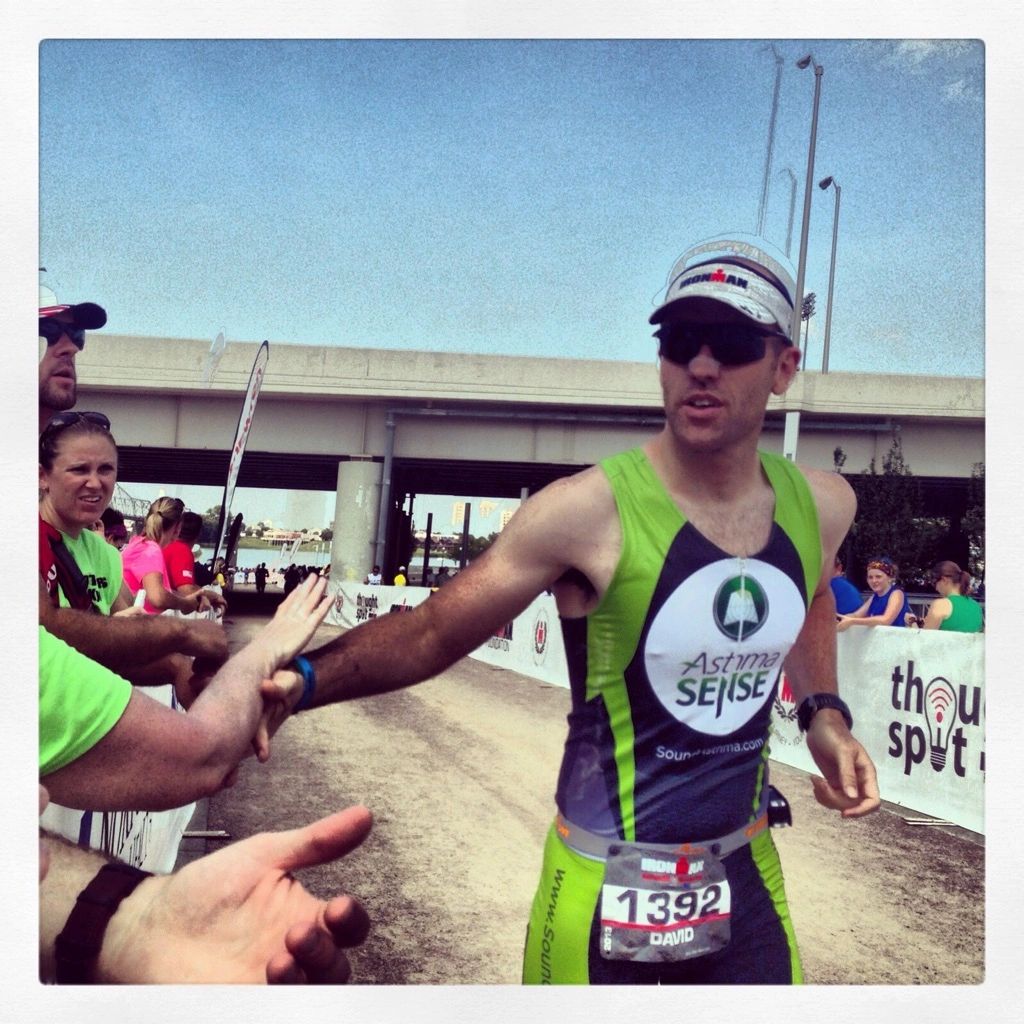
    Some how I made it to the swim finish, climbing out of the water I felt like I could barely walk. My legs felt like I had done a million squats and all I thought about was how am I going to finish this thing. Then my eyes caught the clock and somehow I was 9 minutes faster than last years time. I knew it was because of the current, but I didn’t care and all of a sudden my legs felt fine. I started jogging to the bike and it was like a fresh start. I couldn’t believe it and with a new found energy I was ready to hit the bike!
    To the BIKE

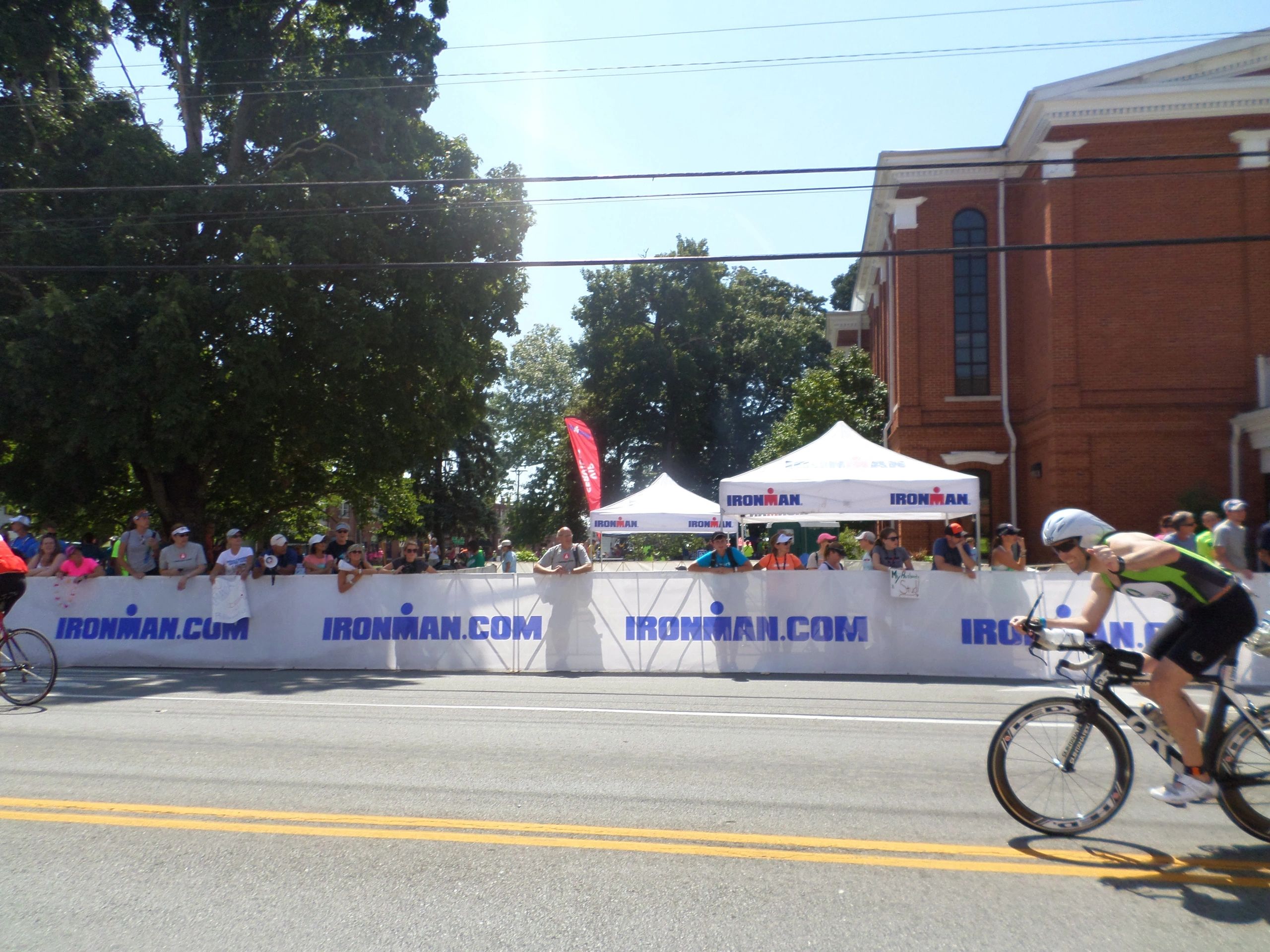
    Making a good transition I was heading out on the bike and was going WAY to fast. I had a plan for a pace out of the gate, it’s super flat to start in Louisville and it’s easy to burn yourself up early. I was purposely making myself go slower than I wanted but was flying and felt like I wasn’t even trying. It was a crazy feeling. Next thing I know I’m at the out and back section of the course which has a really steep valley on it. So you fly down at first, climb up then turn around and do it again. On my way climbing out the valley a guy coming the opposite way hit the pavement hard. Maybe the worst crash I’d seen in a race. His helmet was busted, there was blood on the ground and an ambulance was making it’s way through the race crowd to get to him. Many of the same emotions from the swim started flooding back in. I was questioning everything that day, why am I doing this, how could I put my family thought this, ugh it was tough. But I got through that and kept pushing.

    Still feeling pretty good I’m on the loop in Oldham County at this point. There is an up coming aid station and I need to refill my water and grab some food. Another thing about Ironman races is that you really don’t ever want to stop or slow down all that much in reality. For me, stopping makes it really hard to get going again. So my goal is NOT to get off that bike the entire time. So as you roll into an aid station you slow down, get over to the right and hold your hand out. The amazing volunteers and will hand you what you need as you go past. It’s pretty awesome really how easy it is and how hard they work to help the athletes. I’d done this dozens of times during my races and never had a problem. On this particular day, someone in front of me decides to take a hard left turn. This results in him slamming into my front wheel while I only have 1 hand on the bars. This sends me FLYING over the handle bars, landing square on my should with all of my gear sent flying through the air.

    I land hard, slide across the asphalt and immediately think, what in the hell just happened. My next immediate thought is holy crap I’m on the ground, my bike looks twisted up and my stuff is all over the place. I’ve got one of those volunteers trying to help me up, get my stuff and wanting me to come to the side so they can check me out for injuries. He looked terrified in his eyes, was looking at my shoulder and trying to hold me. As much as I appreciated the concern and all the help all I could think was holy crap I have to get going. He tried to convince me to stop, check my bike, check my body but I was like nope, gotta go. As I’m getting going again I’m checking over my bike for loose parts, bent parts, broken parts and for the most part everything seemed fine so I was back after it. It didn’t take long for my shoulder to start hurting and the road rash to start burning. It made it hard to stay in the proper aero position and get comfortable again and I still had a LONG way to go. The emotions started flooding back in, my back really started to hurt and I knew it was going to be a REALLY long rest of the race.

    Part of the Ironman bike course goes through a town called Lagrange. In the middle of town is a place a lot of families come to cheer you on. Usually its a major lift in energy and emotion to see folks out there cheering for you, spending their time to do all they can to show you love. This year, on this lap it almost broke me. I saw my family, friends and people cheering, with matching t-shirts and signs and I immediately started crying, I wanted so bad to stop the bike and get off to hug someone. It had been an emotionally and physically challenging day already and I still had a really long way to go. But like the swim, I kept pushing and after what felt like an eternity I made it to the bike finish. Somehow, again I was still ahead of last years time and I actually extended that advantage so I was ready to get after the run.
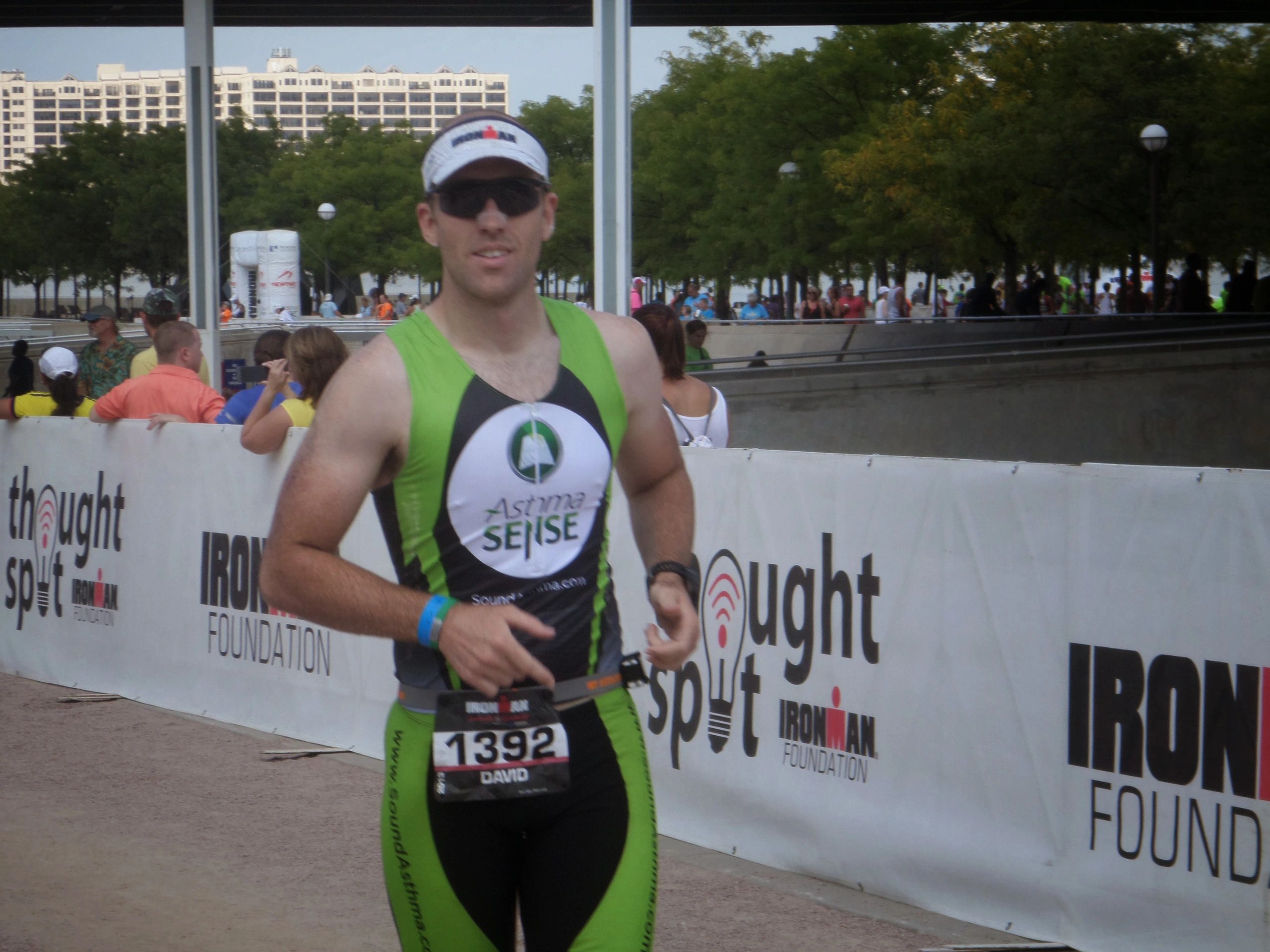
    Time to Run

    Heading out on the run it was nice again to see my family, who still didn’t know about all the challenges I’ve had. I didn’t say anything and tried to hide the road rash. I knew people would worry and I didn’t want that, the day would be over soon enough and I could tell the whole story then. Right off the bat I felt great. Legs felt good and I was on a good pace. I was at about mile 5 and I hadn’t taken any walk breaks and thought it was probably time to walk through the next aid station to make sure I got in some gel and fluids. So that was my plan, I walked through the next aid station being very purposeful to get the fuel down. I went to start running again and I seriously couldn’t do it. My hips SHUT DOWN to the point it felt like the joints were going to freeze up. It was the craziest thing I’ve ever experienced running. I tried to run through it, job, walk/jog, nothing I could do was helping. It was depressing to say the least. I did my best to move as fast as possible but there just wasn’t much there. Luckily I met some other guy who was in a similar situation. He was a preacher from Georgia and had a thick southern accent and we paired up and pretty much walked the last 20 miles together. He really kept my mind off the pain and disappointment of the day. I’m pretty sure God sent him as I’m not sure how I would have managed those last 20 miles to be honest. We separated near the finish line and I did see him again, wish I would have gotten his name.

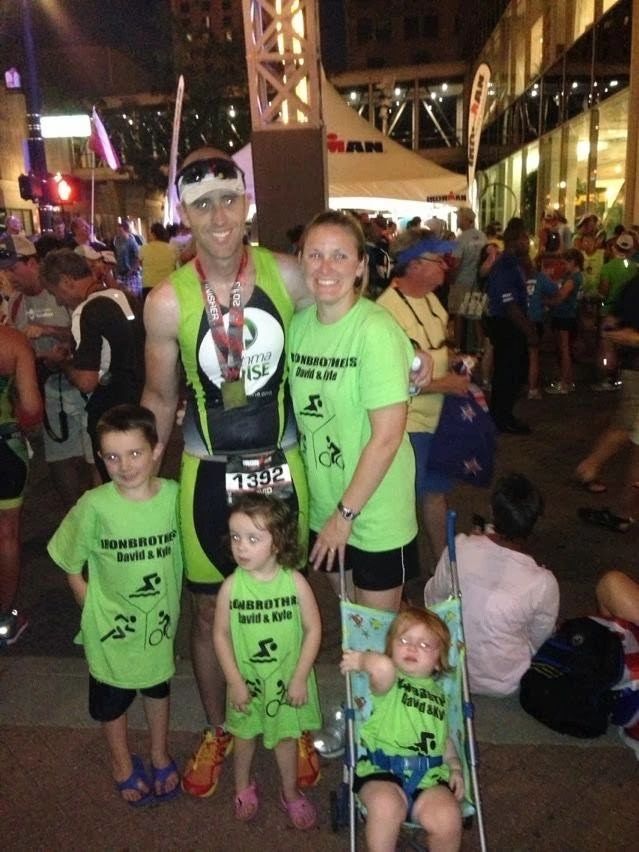
    At some point during he last 10 miles a friend of mine came out to see me. I told him about my day and the wreck and other craziness. Little did I know he shared that with the rest of my support crew so by the time I made it to the finish I think they all were in some mix of worried to death, thinking I was totally nuts or mad at me. haha. But coming down that finish line all I could think about was how I failed, didn’t hit my goal and was disappointed and embarrassed in my performance. My wife was the first person I remember seeing as I cross the finish line. Really the only thing I remember about that finish was falling into her arms and sobbing like a baby. She is my rock and that is a moment I will never forget. All she and my 3 kids felt were pride in me and thankfulness I was ok. I am a blessed man…
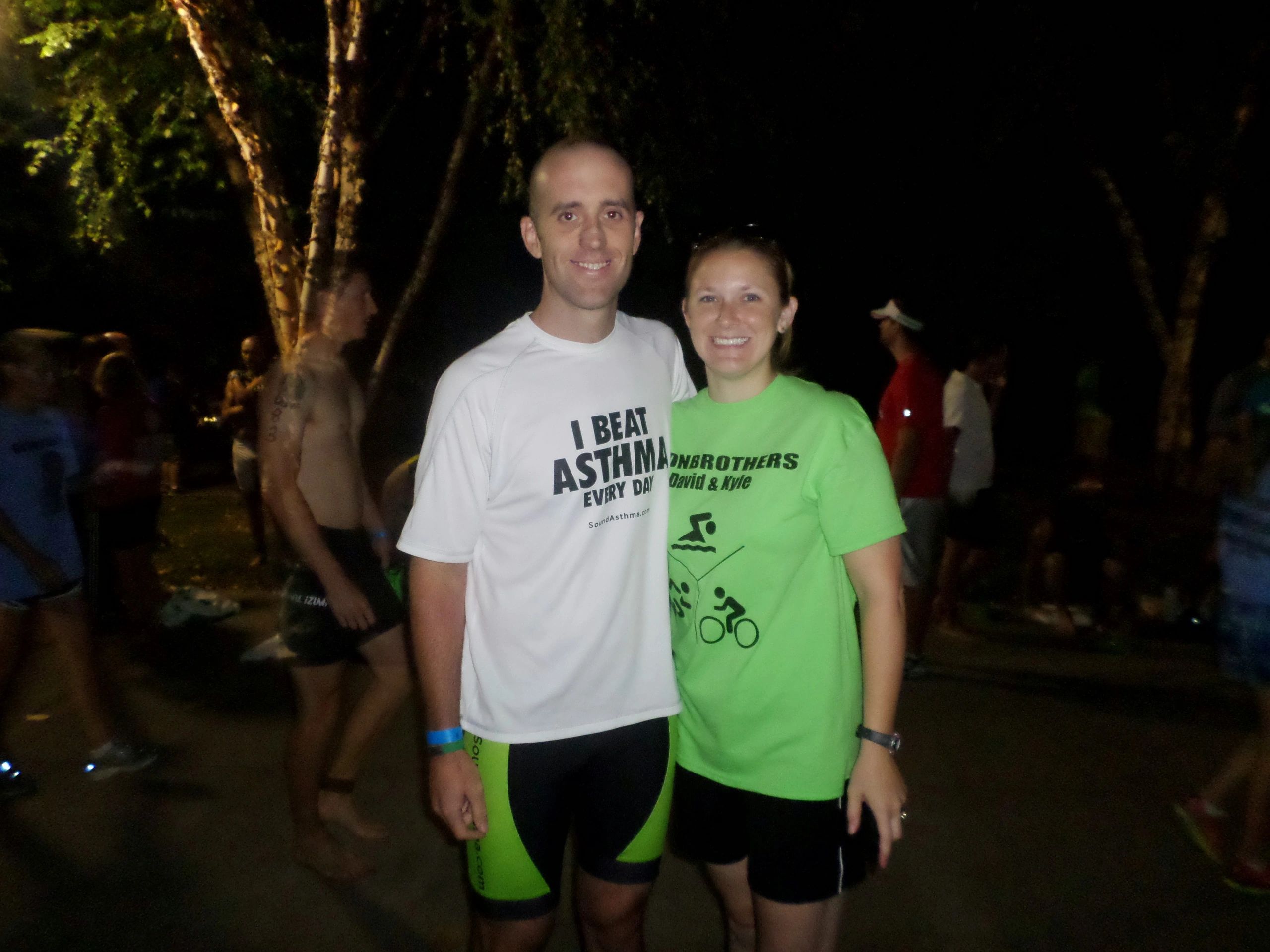
    Lessons Learned

    Looking back on that day is emotional. It took me a while to get over the disappointment but after a while and after talking to some friends that disappointment started to change. I started looking at this day as a day that made me stronger. A day I could always look back on and be proud of. I pushed through things that many will never experience or push through. The toughness that I found that day sits in me today and I recall it regularly as a source of strength. Remembering that I can do absolutely anything I put my mind to. Challenges can either stop you or make you strong, I chose to use this one to make me stronger. GRIT is something that can be learned, experience, nurtured and grown. This was a GRIT day for me and I’m better for it.

    I hope you take from this memory the same thing I hope my kids take from it. NEVER EVER GIVE UP! You are worth it and you can accomplish amazing things if you just want it bad enough. Life truly does happen on the other side of your comfort zone, I know, I’ve been there.

    I’m targeting doing another Ironman when I’m 50. I have no idea why, but it’s a target on my list. Hopefully I’ll see you out there. And I won’t have crazy cramps or a wreck to tell you about.